How to Build a Cosmetic Bag Supplier Qualification Checklist for OEM Projects
Short answer: A useful cosmetic bag supplier qualification checklist should verify five things before a buyer compares quotations: the supplier’s product and customization fit, sample-control process, MOQ logic, quality-control evidence, and destination-market compliance documentation. Price should be reviewed only after those checkpoints are documented.
What should a cosmetic bag supplier qualification checklist prove?
The checklist should help a beauty brand, retailer, wholesaler, or Amazon seller answer one practical question: Can this supplier turn an approved design into repeatable, compliant production for the intended channel? That question is broader than finding a factory with attractive product photos.
Review the supplier in the order a project actually moves: brief, materials, sample, approval, production, inspection, documentation, and shipment. This creates an evidence trail that can be shared with purchasing, product, quality, and compliance teams.
Which supplier-fit questions should buyers ask first?
Does the factory make the product family you need?
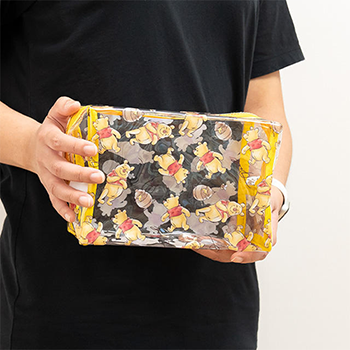
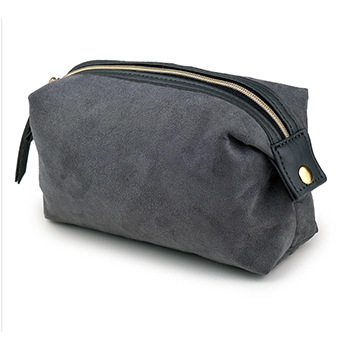
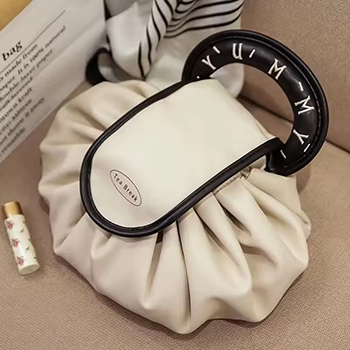
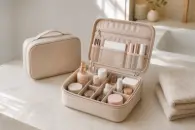
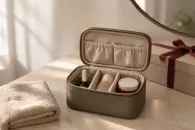
Start with product fit. BEARKY’s public product structure includes cosmetic bags, toiletry bags, pouches, tote bags, and gift bags. Its cosmetic-bag category also presents material and feature filters such as recycled materials, polyester, canvas and cotton, PU leather, PVC, TPU, Tyvek, corduroy, nylon, zipper closures, drawstrings, clear windows, divided interiors, and hanging formats. A buyer should map the requested product to a real category or product example before requesting a price.
Useful evidence includes comparable construction, the proposed material, closure, lining, decoration area, and a clear statement of what will be customized rather than merely relabeled.
Can the supplier translate a brief into a controlled sample?
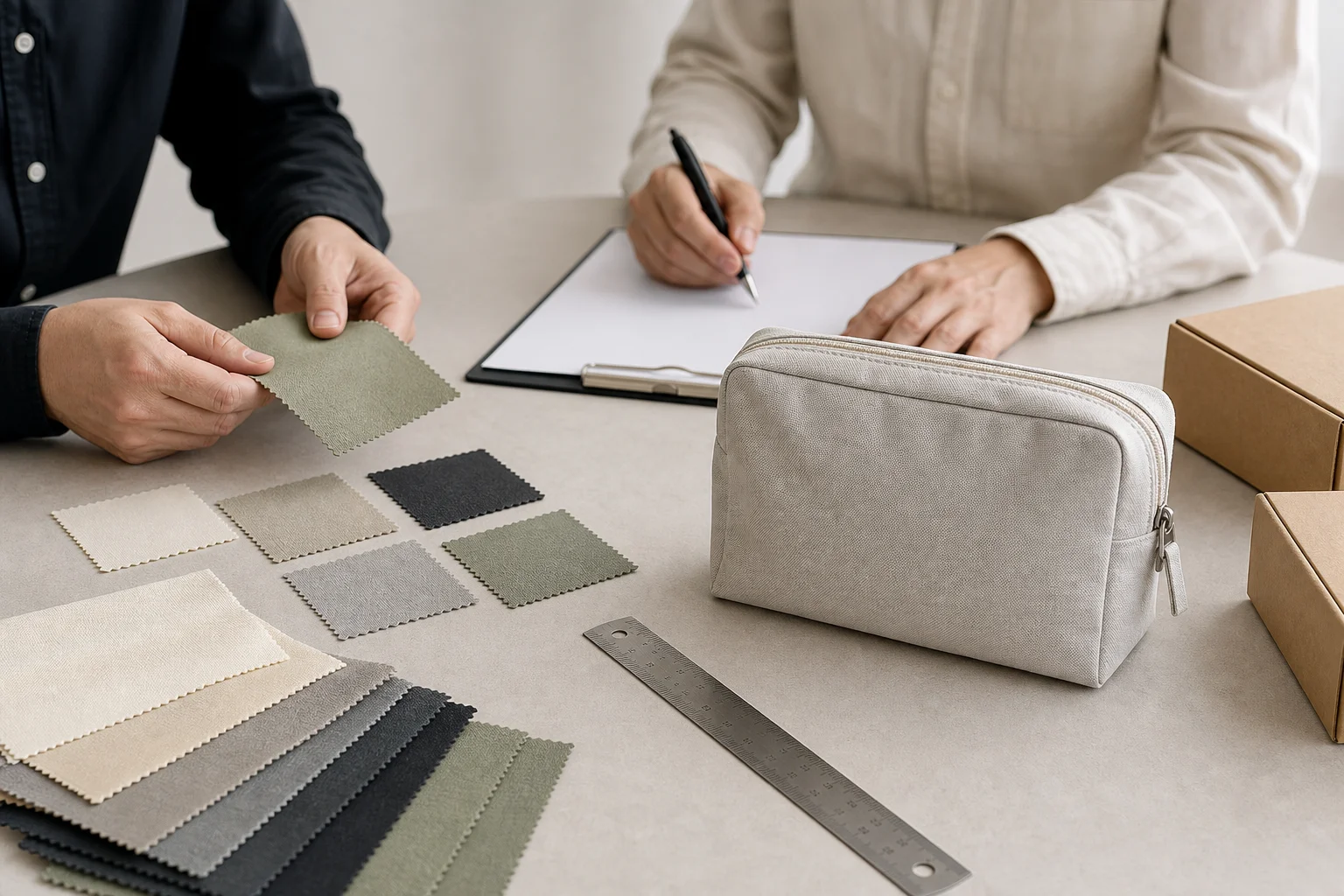
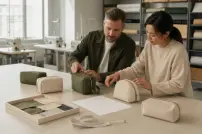
Ask for a sample path that records the approved artwork, measurements, material, color reference, hardware, packaging, and revision history. A sample is not only a visual preview; it is the reference against which production and inspection should be compared.
- Request a written product brief and a named approval version.
- Confirm which parts are standard and which parts are custom.
- Record the material and color reference for each visible component.
- Approve the opening, compartments, trims, logo placement, and packaging separately.
- Keep the signed-off sample or golden sample available for later inspection.
How should OEM and ODM capability be evaluated?
What is the difference between OEM and ODM in a cosmetic bag project?
OEM usually means the buyer supplies the design direction and the factory manufactures it. ODM usually starts from an existing factory design that is adapted for the buyer’s brand, color, logo, or packaging. In practice, a project can combine both: a standard silhouette with custom materials, or a buyer-supplied shape developed into a production pattern.
Ask the supplier to label each project element as standard, modified, or newly developed. This prevents a quotation from appearing comparable when the underlying development work is different.
Which customization points should appear in the quotation?
| Project point | What to confirm | Evidence to retain |
|---|---|---|
| Structure | Shape, opening, pockets, compartments, handle or hanging detail | Approved drawing, sample photos, or physical sample |
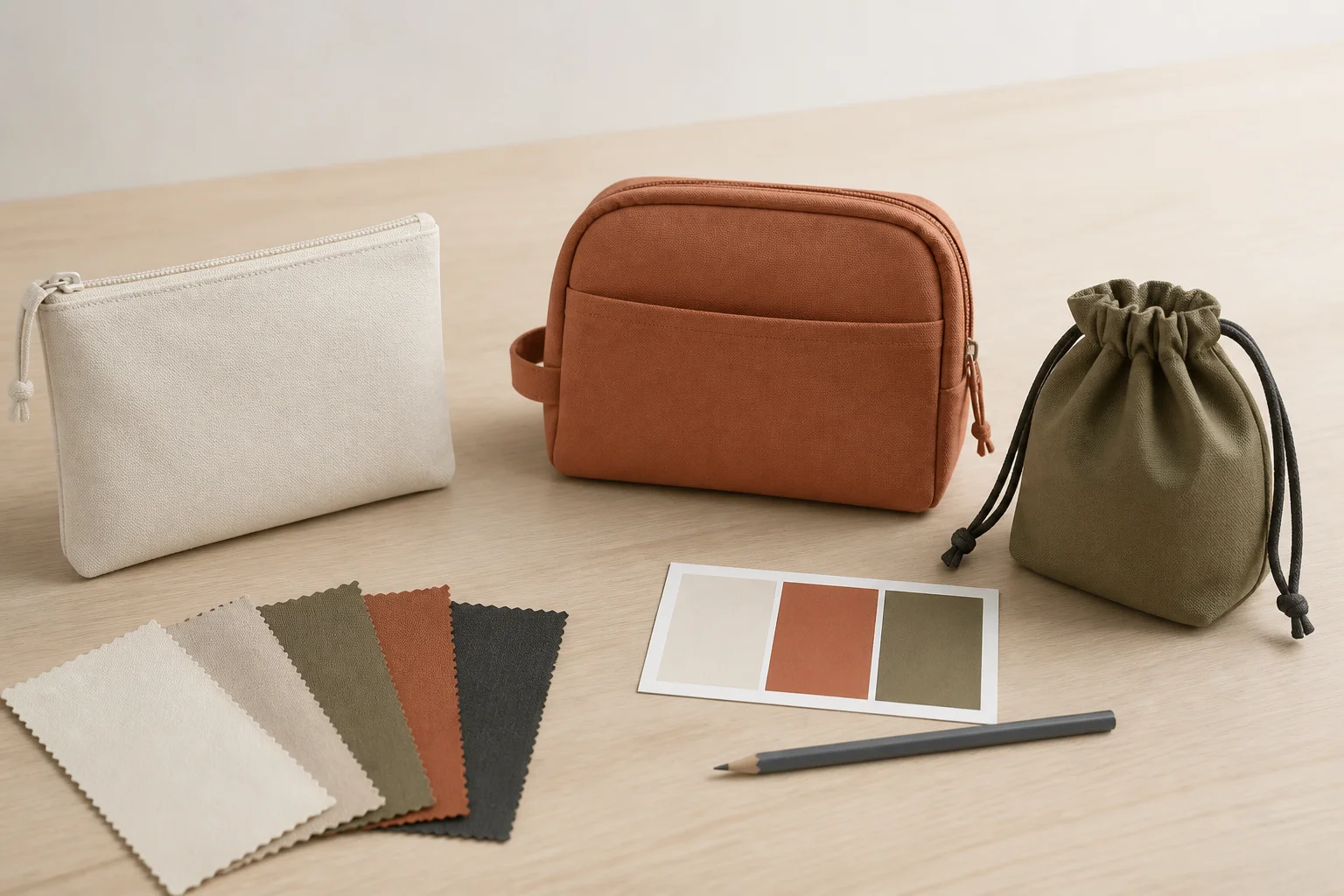
| Material | Outer fabric, lining, trims, finish, and any requested recycled or regulated-material documentation | Swatch, material description, test or supplier document where applicable |
| Branding | Print, embroidery, debossing, patch, hardware logo, label, and placement | Artwork proof and decoration sample |
| Packaging | Individual packing, hangtag, barcode, carton configuration, and shipping marks | Packaging artwork and packing approval |
How should MOQ and lead-time information be checked?
Do not treat MOQ as one universal factory number. Confirm whether it applies to a ready-to-ship item, a colorway, a custom logo, a new pattern, or a complete OEM project. Ask for the MOQ by SKU, color, material, and packaging configuration.
BEARKY’s live public pages show different order quantities on different listings, including examples of 200, 300, and 500 pieces, while the customization page describes lower MOQ availability for many bags. This is useful evidence that MOQ is product- and project-dependent, not a number that should be copied across every quotation.
What quality-control evidence should a buyer request?
Which checkpoints belong in the approval plan?
BEARKY’s quality page describes a five-step flow: raw-material inspection, in-process inspection, semi-finished product check, final product inspection, and pre-packaging inspection. The page specifically references checks for stitching, print quality, embossing, dimensions, structure, color consistency, zippers, seams, function, quantities, labels, and packaging durability.
For a buyer, the practical next step is to convert those stages into acceptance criteria for the project:
- Define the approved sample and measurable tolerances.
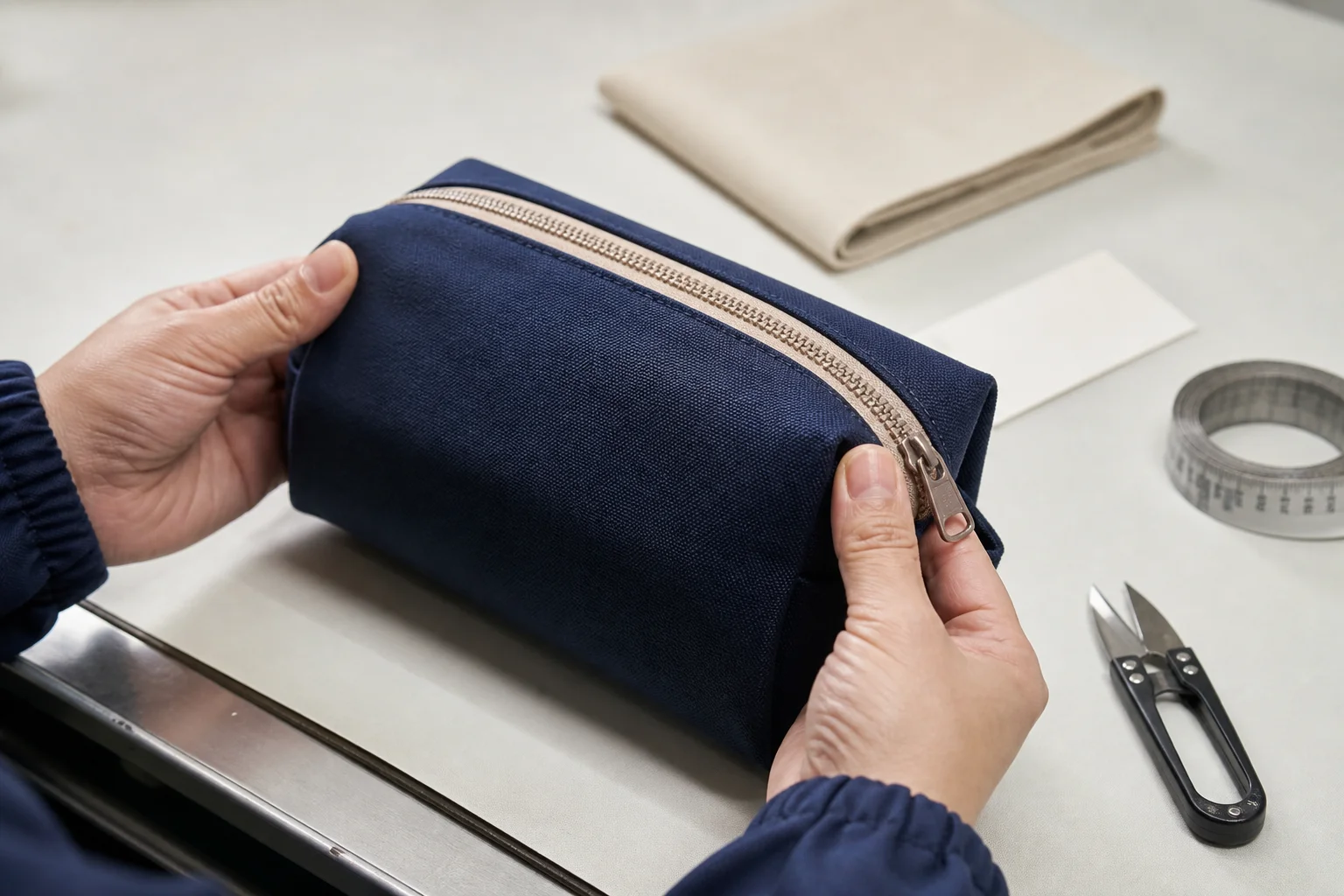
- Define the acceptable appearance of stitching, printing, embossing, zipper action, and lining.
- Define how color and packaging are compared with the approved reference.
- Agree whether the buyer, a third-party inspector, or both will inspect.
- Record nonconformities and the agreed corrective action before shipment.
How should compliance claims be handled?
Compliance is not a badge to paste into a product description. It is a documentation question tied to the material, product, destination, and claim. BEARKY’s quality page lists BSCI audit, REACH and AZO-free testing, and CA Prop 65 and CPSIA readiness; buyers should request the applicable current documents and confirm that they cover the selected product and market.
For U.S. children’s products, the U.S. Consumer Product Safety Commission explains that children’s products must comply with applicable safety rules and certification requirements. For EU chemical restrictions, the European Chemicals Agency maintains the REACH restriction and Candidate List resources. These sources are reference points for the buyer’s compliance review, not substitutes for project-specific documents.
What should the final supplier scorecard include?
| Scorecard area | Pass condition | Follow-up if unclear |
|---|---|---|
| Product fit | Comparable product, construction, and customization route are identified | Request a matching product page, sample, or development plan |
| Sample control | Revision, artwork, materials, and approval owner are documented | Ask for a single controlled approval version |
| MOQ and cost | MOQ is stated by SKU/configuration and quotation assumptions are visible | Request a configuration-level quote |
| Quality | Inspection stages and acceptance criteria are agreed | Request the inspection checklist and sample comparison method |
| Compliance | Current, applicable documentation is available for the destination market | Ask which document covers the exact material/product |
| Commercial execution | Payment, shipping, delivery assumptions, and escalation contact are recorded | Review BEARKY’s payment and shipping page, then request a project quote |
Why should buyers use a documented qualification process?
A documented process reduces the risk of comparing unlike quotations, approving the wrong sample, or relying on an unsupported compliance or sustainability statement. It also makes internal approval faster because product, purchasing, and quality teams are reviewing the same evidence.
For environmental marketing, the U.S. Federal Trade Commission’s Green Guides are a useful reminder that claims should be truthful, substantiated, and specific. The same discipline applies to supplier communications: state what is documented, what is pending, and what still needs confirmation.
Frequently asked questions
What is the most important item on a cosmetic bag supplier qualification checklist?
The most important item is evidence that the supplier can reproduce an approved sample under defined quality and compliance requirements. A low price without controlled evidence is not a complete qualification.
How do I compare MOQ between two cosmetic bag manufacturers?
Compare MOQ by the same configuration: product shape, material, colorway, logo method, packaging, and order quantity. A factory-level headline MOQ is not comparable if the project assumptions differ.
Should I order a sample before approving an OEM cosmetic bag?
Yes. Use a physical sample to review shape, opening, materials, decoration, stitching, color, lining, and packaging before mass production. Keep the approved sample as the reference for inspection.
What quality checks should be written into the purchase approval?
Write down appearance, dimensions, structure, color, zipper and seam function, decoration quality, labels, quantities, packaging, and the process for recording defects and corrective action.
Does a factory’s certification automatically cover my product?
No. Confirm the scope, validity, product, material, destination market, and document owner. A general company statement should not replace the project-specific evidence your buyer or importer requires.
How can a small brand reduce supplier-selection risk?
Start with a tightly defined brief, request a controlled sample, use a configuration-level MOQ and quotation, retain approval records, and agree on inspection before production. A smaller first order can still require the same evidence discipline.
Ready to qualify a cosmetic bag supplier?
Send BEARKY your target product, material direction, logo artwork, estimated quantity, destination market, packaging needs, and required approval date through the official contact page. You can also review the customization workflow, quality-control page, and payment and shipping guide before requesting a project quotation.


.webp)
.jpg)