How to Plan a Cosmetic Bag Assortment by Material, Structure, and Use Case
Short answer: Plan a B2B cosmetic bag assortment by starting with the products and situations the bag must serve, then match each use case to visibility, cleanability, structure, decoration, and price-position requirements. A clear pouch can support visibility-led travel or promotional use, while canvas, PU-style, quilted, nylon, or organized weekender formats can serve different retail and beauty-program roles. The final choice should be confirmed with a physical sample and destination-market documentation.
How should a beauty brand start cosmetic bag assortment planning?
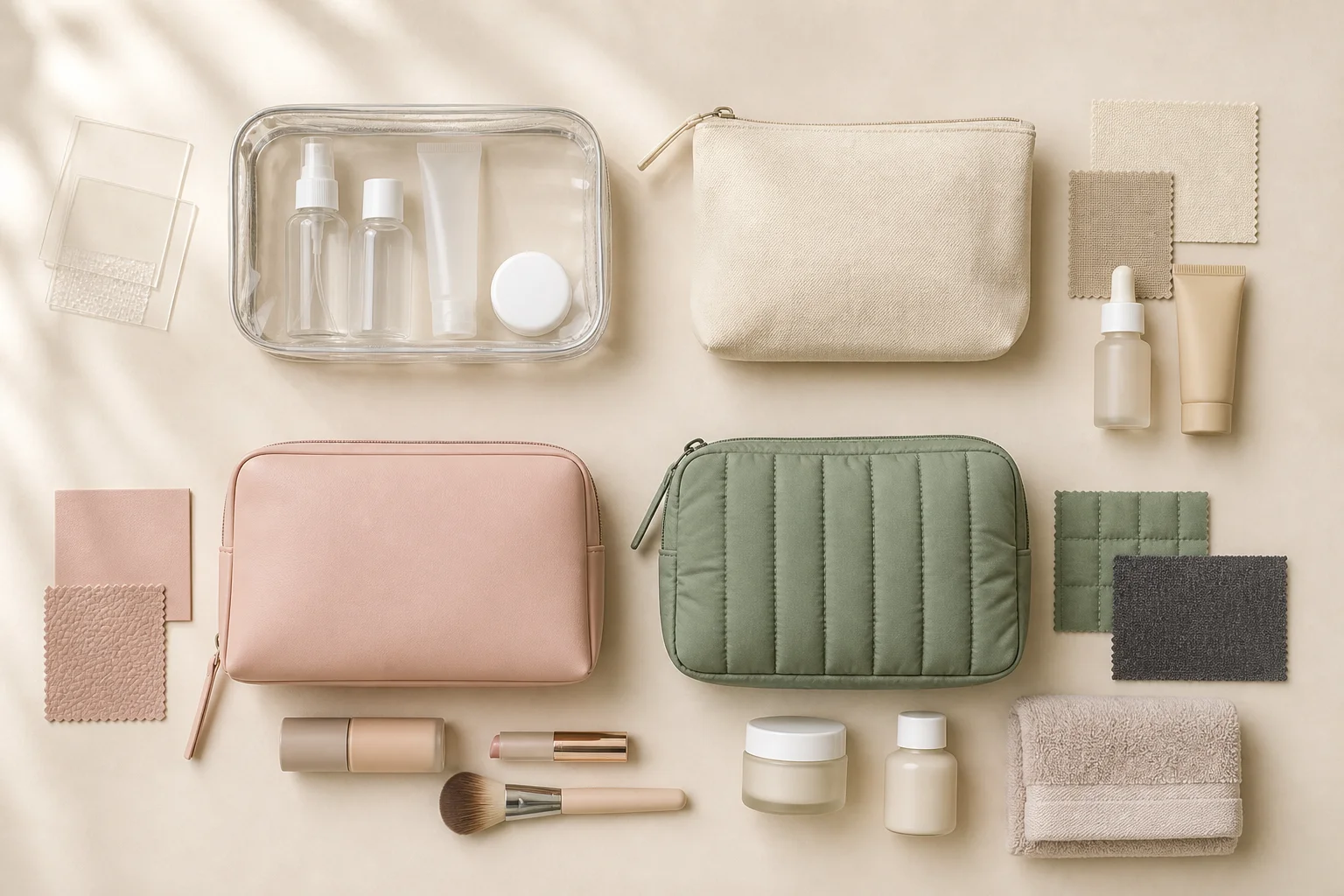
Start with the job the bag must perform, not with the fabric name. List the contents, opening behavior, organization needs, handling environment, branding area, packaging format, and expected retail position. Then build a small, intentional range instead of adding materials that do not serve a distinct use case.
BEARKY’s public cosmetic-bag category shows a broad material direction—recycled materials, polyester, canvas and cotton, PU leather, PVC, TPU, Tyvek, corduroy, nylon, and others—alongside features such as zipper closure, drawstring, roll-up, divided construction, clear windows, and hanging formats. Those filters are useful starting points for assortment planning, but the selected material and feature combination still needs project-level confirmation.
Which cosmetic bag format fits each B2B application?
| B2B application | Useful format direction | Questions to answer before sampling |
|---|---|---|
| Beauty launch or gift set | Compact pouch, giftable case, or coordinated set | What must the bag hold, and how should it work after the campaign? |
| Travel or toiletry program | Wider opening, organizer, hanging, or divided format | Does the structure make products easy to see, separate, and access? |
| Retail shelf assortment | Distinct silhouettes across entry, core, and premium tiers | Can the buyer understand the difference at a glance? |
| Amazon or marketplace line | Clear product role, practical closure, and strong image readability | Will the construction and material story be easy to explain accurately? |
| Wholesaler or promotional program | Repeatable pouch or organizer with a clear decoration area | Can packaging, logo application, and order configuration be standardized? |
What does each material direction help a buyer evaluate?
When is a clear PVC or TPU cosmetic bag useful?
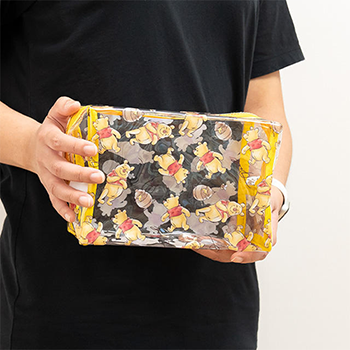
Clear formats can make contents visible and support travel, quick identification, promotional kits, or applications where the buyer wants the product assortment to remain on view. BEARKY lists clear PVC and TPU cosmetic bag options, including a transparent TPU organizer described for makeup, toiletries, and travel essentials.
For sampling, review clarity, edge finishing, closure behavior, transparency, print placement, and the intended contents. Do not describe a clear bag as waterproof, TSA-compliant, or chemically compliant unless the exact product documentation supports that wording.
When does canvas or cotton create a different product role?
Canvas and cotton can support a softer, textile-led visual direction for daily pouches, gift sets, lifestyle collections, or brands that want a tactile surface. BEARKY lists canvas and cotton among its cosmetic-bag material categories and presents quilted cotton and canvas product examples.
Ask whether the final design needs a plain surface, printed artwork, quilting, a wrist strap, a particular lining, or a defined decoration method. A material choice should be evaluated together with the intended cleaning, handling, and packaging expectations.
How can PU-style, velvet, corduroy, or quilted surfaces support assortment tiers?
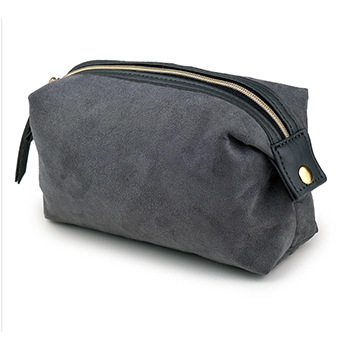
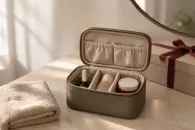
PU-style, velvet, corduroy, and quilted surfaces can help separate a premium-looking or giftable tier from a simpler pouch, but the surface alone does not prove durability, sustainability, or luxury performance. BEARKY’s public product pages present PU leather, suede-finish, velvet, corduroy, and quilted cosmetic bag examples with different silhouettes and organization approaches.
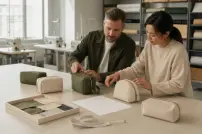
Compare the hand feel, crease behavior, edge finish, lining, hardware, logo method, and packaging at sample stage. Keep the commercial language tied to what the selected sample and documentation actually show.
How should structure and material be evaluated together?
Does the opening match the contents?
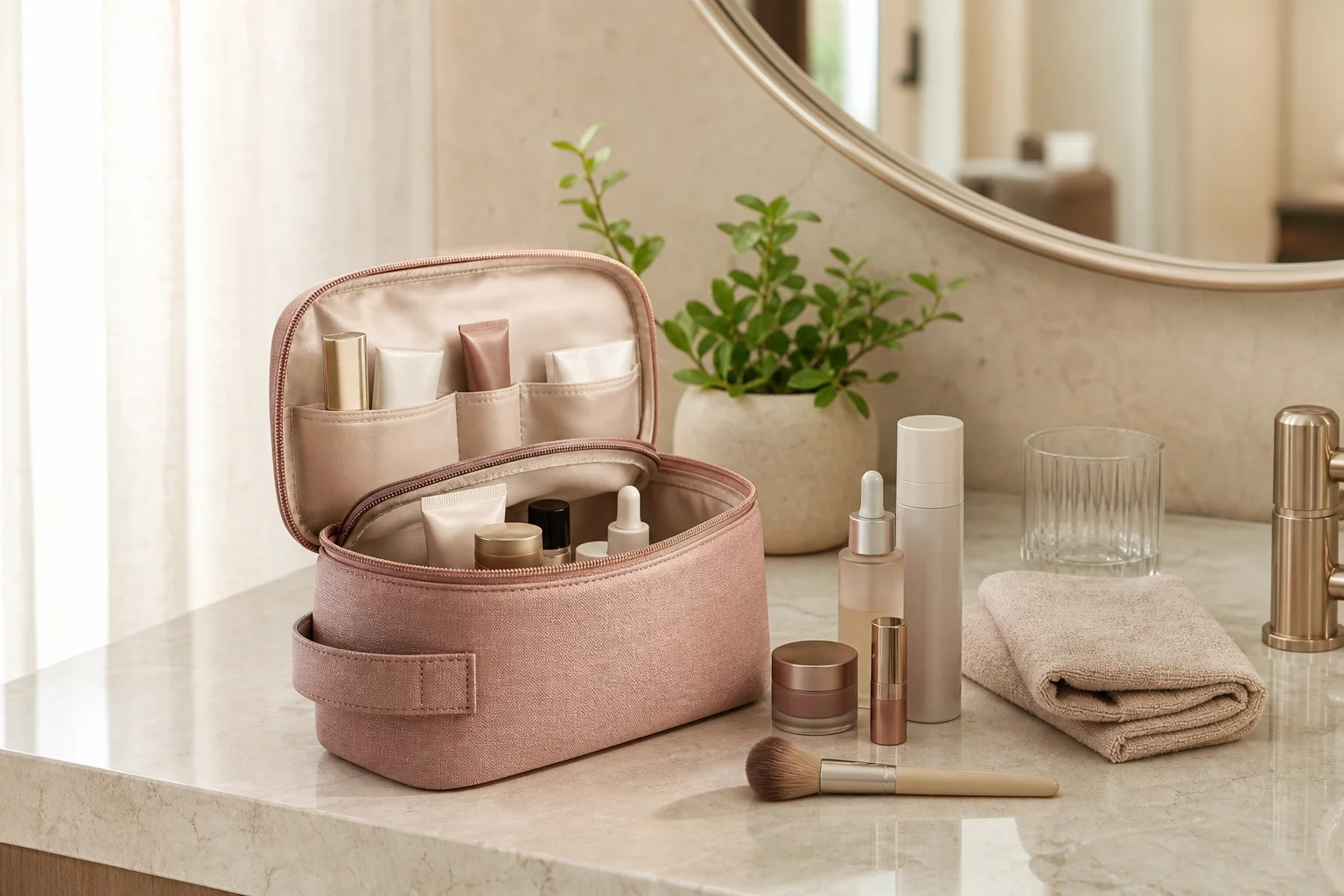
A narrow zipper opening can suit small personal items, while a wider opening can make a travel or skincare assortment easier to access. BEARKY describes its waterproof weekender organizer with a wide opening, multiple compartments, a top handle, and customizable lining options. Treat those as product-page facts for that listed format, not as universal features of every BEARKY bag.
Will the internal organization solve a real problem?
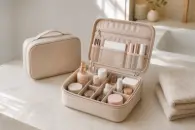
Choose divided, mesh, hanging, or single-compartment structures only when they support the contents and use environment. A beauty brand launching small skincare items may need separation; a promotional pouch may need a simpler structure that packs efficiently. Ask for a sample packed with the actual or representative product assortment.
How should branding and packaging affect the design?
Review the logo area, decoration method, zipper and trim color, hangtag, barcode, insert, and outer carton as one system. BEARKY’s customization page describes logo, tag, package, material, color, and printing customization; the selected project should still confirm the exact method and placement.
What should buyers compare during a sample review?
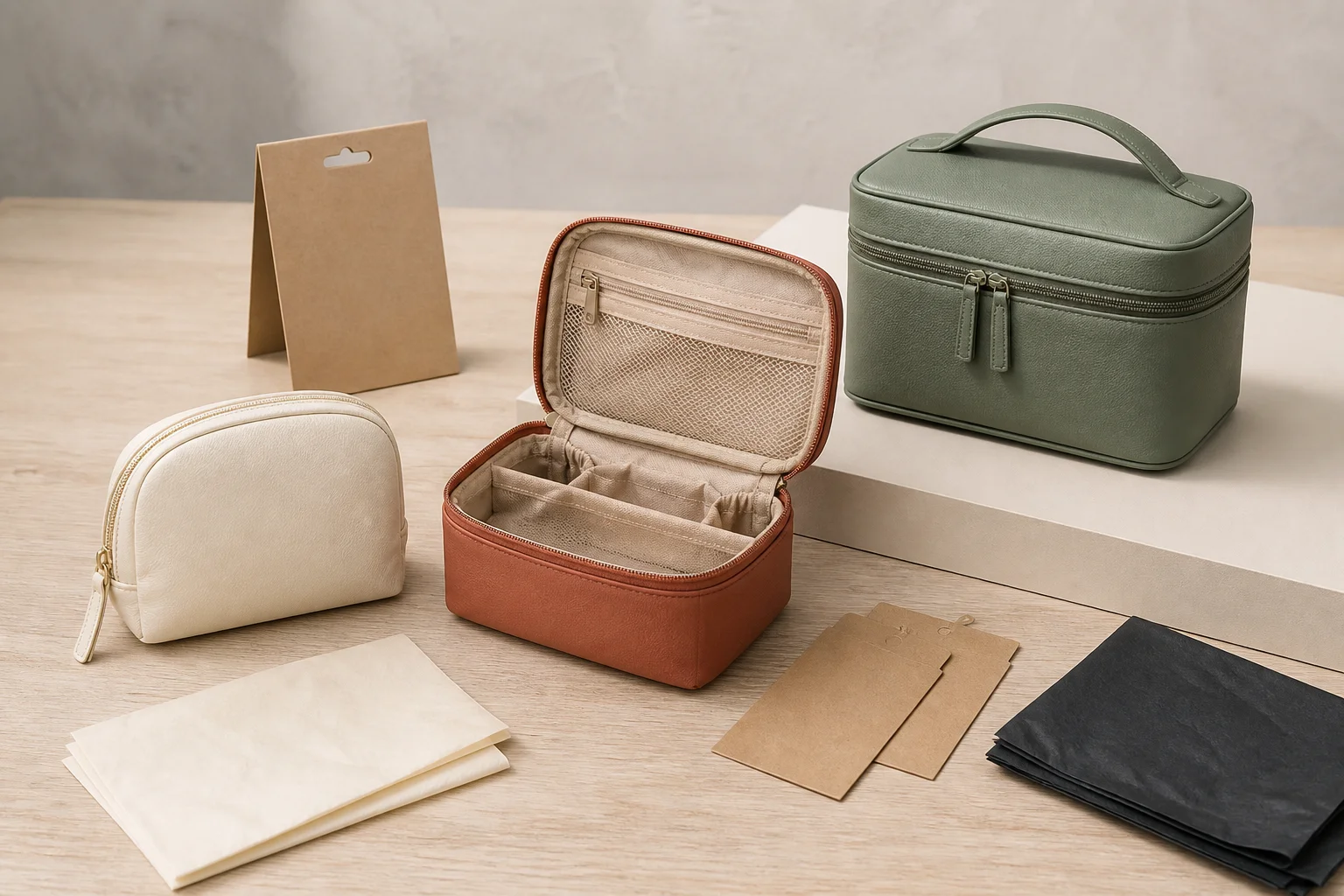
| Review area | What to compare | Approval question |
|---|---|---|
| Material surface | Texture, color, hand feel, transparency, crease response, and visual consistency | Does the surface support the intended product tier and claim language? |
| Structure | Opening, compartments, lining, handle, hanging feature, and closure | Does the bag make the intended contents easy to organize? |
| Branding | Logo scale, contrast, placement, decoration quality, and trim coordination | Is the brand visible without overpowering the product? |
| Use case | Travel, vanity, retail shelf, gift set, subscription box, or promotional handling | Can the team explain why this format exists in the assortment? |
| Documentation | Material description, test reports, market requirements, and packaging information | Are all public claims supported for the selected product? |
How can an assortment avoid internal competition?
Give each SKU a distinct reason to exist. One product can lead with visibility, another with travel organization, another with a tactile premium surface, and another with an entry-level compact format. Avoid launching several bags that differ only by color while using the same structure, price position, and use case.
Assign one primary user problem to each SKU.
Use structure, not only color, to create meaningful separation.
Give each material a clear role in the assortment.
Match packaging and imagery to the product’s actual use.
Write claims only after the material and compliance review is complete.
What compliance questions belong in a material decision?
Ask which destination markets apply, whether the bag is intended for children, whether materials or decorations require chemical testing, and which claims the brand plans to publish. The CPSC provides business guidance for children’s products; ECHA maintains REACH restriction and Candidate List resources; and the FTC Green Guides explain why broad environmental claims need careful qualification and substantiation.
Editor review required: Confirm the selected material, exact product construction, intended market, test scope, certification or compliance documentation, and any sustainability wording with BEARKY before publication. Do not generalize a product-page claim to the full assortment.
Frequently asked questions
What is the best material for a wholesale cosmetic bag?
There is no universal best material. Choose based on the intended contents, use environment, visual direction, structure, decoration, packaging, target market, and documented claims.
Are clear TPU or PVC bags suitable for travel products?
They can be suitable when visibility and easy identification are important. Confirm the exact material, closure, dimensions, intended use, and destination-market requirements for the selected design.
Should a beauty brand use the same material across an entire assortment?
Not necessarily. A consistent color or branding system can connect the range while different materials and structures give each SKU a distinct job and price position.
How do I choose between a pouch and an organizer?
Choose a pouch when compact carrying and simple access are enough. Choose an organizer when the contents need separation, a wider opening, multiple compartments, or a hanging/portable function.
Can BEARKY customize material, color, logo, and packaging?
BEARKY’s customization page and product listings describe customization options for materials, colors, logos, tags, and packaging. Confirm the available option for the selected product and project before approval.
What should an Amazon seller request from a cosmetic bag manufacturer?
Request a clear product brief, sample, material description, packaging plan, decoration proof, configuration-level MOQ and quotation, inspection criteria, and documentation needed for the target market. Avoid publishing claims that are not supported by the selected product records.
How can wholesalers create a more useful assortment?
Build distinct roles such as compact everyday pouch, travel organizer, giftable premium case, and visibility-led clear format. Test each role with representative contents and packaging before placing a broader order.
Planning a B2B cosmetic bag assortment?
Send BEARKY your target users, product contents, material direction, preferred structure, logo artwork, packaging needs, estimated quantity, and destination market through the official contact page. Review the cosmetic bag category, transparent TPU organizer example, weekender organizer example, and customization workflow before requesting samples.


.webp)
.jpg)