Custom Quilted Cosmetic Bags: A B2B Buyer’s Guide to Fabrics, Padding Density, Patterns & OEM Production
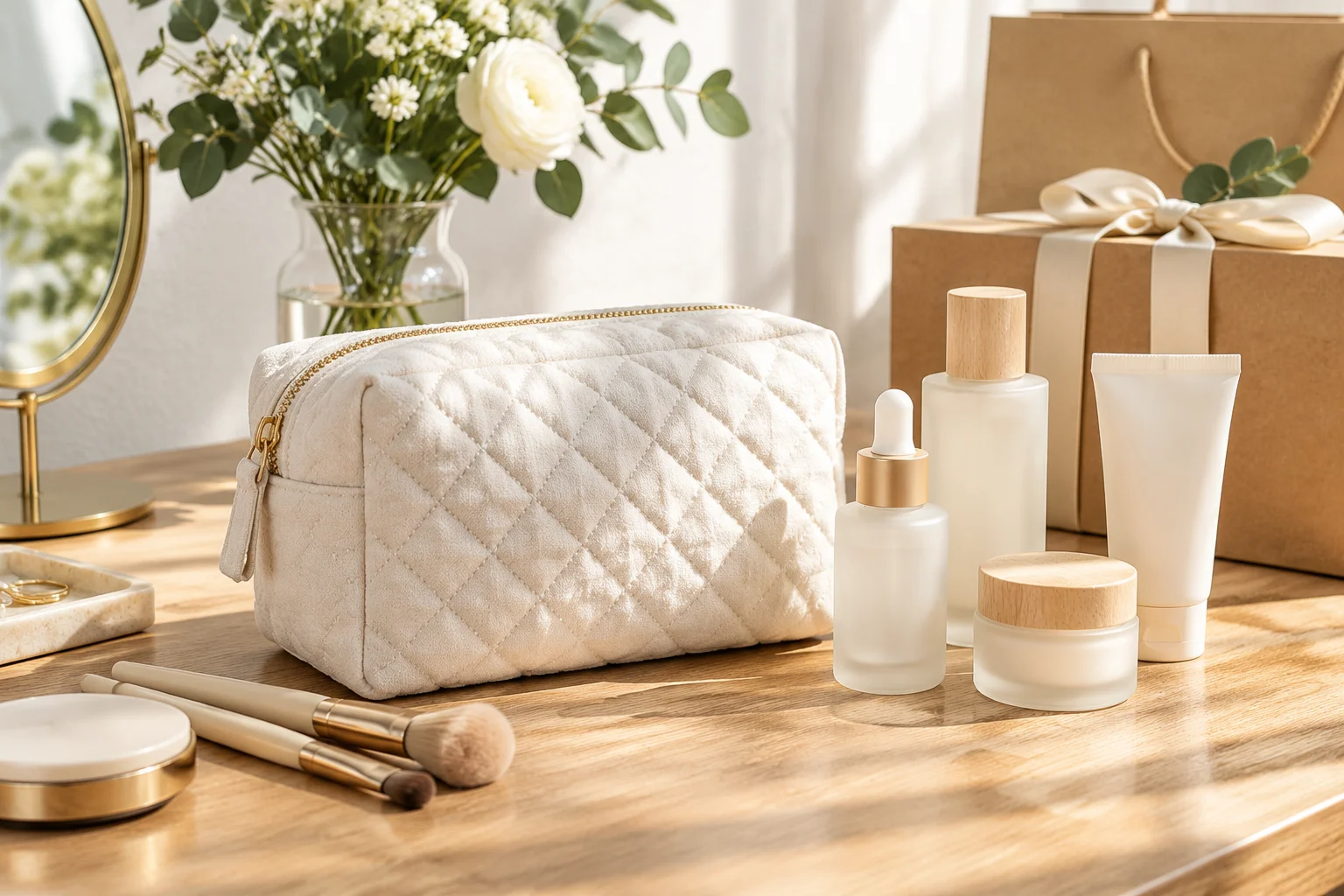
Short answer: Custom quilted cosmetic bags achieve premium tactile appeal, structural softness, and product protection through a calibrated sandwich construction: outer fabric (washed cotton canvas, recycled nylon, velvet, or supple PU leather), needle-punched or polyester batting (typically 80 to 160 gsm), and a spill-resistant inner lining (such as 210D polyester or wipe-clean TPU). Selecting the right stitch pattern (diamond, channel, onion/wave, or custom bespoke geometric motifs) dictates both manufacturing efficiency and retail brand positioning for holiday gift sets, boutique beauty collections, and e-commerce bundles.
In contemporary beauty merchandising, quilted cosmetic pouches have emerged as a high-margin, visually differentiated packaging and retail category. Whether designed as luxury gifts-with-purchase (GWP), seasonal beauty gift set packaging, or standalone boutique travel accessories, quilted pouches deliver high perceived value through their soft cushioning and artisanal texture. Sourcing custom quilted bags requires commercial buyers to balance aesthetic pattern complexity with production lead times, washability, and bulk cost control.
Which outer fabrics work best for custom quilted cosmetic bags?
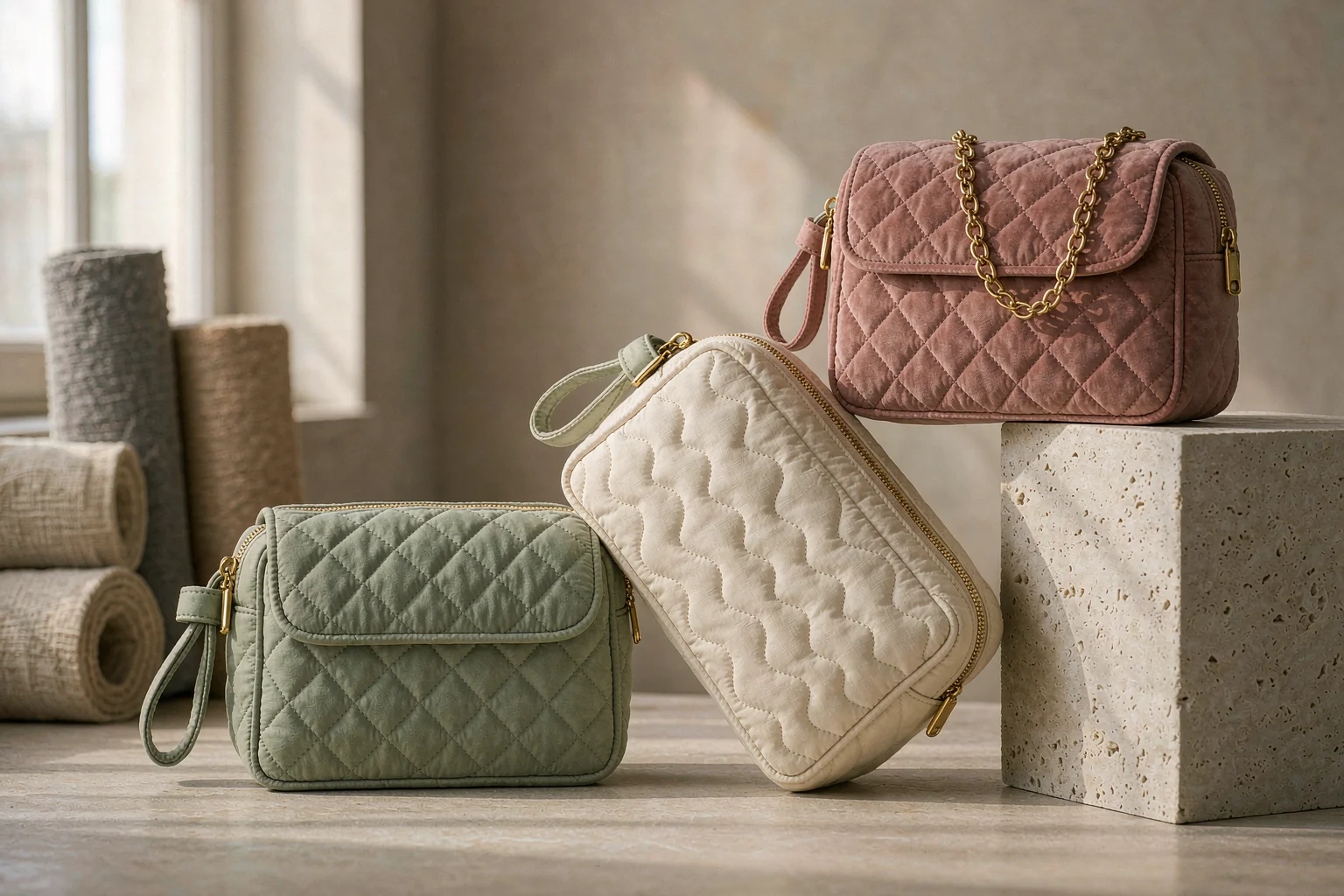
The choice of exterior fabric determines the bag's visual hand-feel, durability, color vibrancy, and compliance suitability. When planning custom OEM development with a factory like BEARKY, buyers typically choose between four core textile families:
| Fabric Type | Typical Weight / Spec | Aesthetic & Tactile Feel | Best Retail & Merchandising Application | Key Care & Compliance Notes |
|---|---|---|---|---|
| Washed Cotton & Organic Canvas | 8 oz – 12 oz (230–340 gsm) | Natural, matte, breathable, and soft vintage hand-feel. | Clean beauty brands, eco-conscious boutique collections, organic skincare gift sets. | Tested under OEKO-TEX Standard 100; pre-shrunk to prevent puckering during subsequent machine washing. |
| Puffy Recycled Nylon / Polyester (RPET) | 70D – 210D Taslon or Taffeta | Sleek, lightweight, water-repellent, modern sporty chic. | Travel toiletry kits, gym/commuter makeup pouches, active beauty lines, Amazon bestsellers. | Durable water repellent (DWR) surface finish; readily complies with Global Recycled Standard (GRS). |
| Plush Velvet & Velour | 220–280 gsm Micro-Velvet | Ultra-soft, opulent sheen, rich color depth in jewel tones. | Holiday advent calendars, luxury perfume gift sets, evening clutches, bridal beauty kits. | Requires specialized Teflon presser feet during quilting to prevent pile crushing and stitch marks. |
| Soft Vegan PU Leather | 0.7mm – 0.9mm Microfiber / PU | Supple, smooth grain, easy wipe-clean maintenance. | High-end cosmetic organizers, designer travel train cases, professional makeup artist sets. | Must meet California Proposition 65 and EU REACH limits for phthalate and heavy metal safety. |
Explore our full range of manufactured designs in the BEARKY Cosmetic Bags category and review specific models such as the Quilted Cotton Cosmetic Bag and the Heart-Quilted Cosmetic Bag.
How do you select batting gram weight and padding density?
The internal batting (padding) provides the "puffy" three-dimensional relief that defines a quilted bag. Selecting the correct batting gram weight (ASTM D3776) is essential to achieving the intended hand-feel without making seams too bulky for smooth zipper operation:
- Lightweight Batting (60–80 gsm): Produces subtle surface texture with minimal puffiness. Ideal for slim clutch pouches, compact cosmetic sleeves, and inner envelope organizers that fold flat for shipping.
- Standard Batting (100–120 gsm): The industry standard for retail beauty bags. Offers balanced tactile softness, excellent dimensional recovery, and sufficient protective cushioning for glass cosmetic dropper bottles and compact powders.
- High-Loft Batting (140–180 gsm): Creates a cloud-like, ultra-puffy statement aesthetic. Popular in Gen-Z lifestyle accessories and winter holiday collections. Requires specialized edge-skiving and computerized sewing machines to prevent seam jamming.
- Needle-Punched vs. Spray-Bonded Batting: Needle-punched cotton/poly batting is preferred over loose resin-bonded batting because fibers stay locked during washing and will not migrate or clump inside the quilted channels over time.
What quilting stitch patterns are available for custom OEM production?
Computerized multi-needle and single-needle CNC quilting machines allow brands to execute complex stitch patterns with millimeter precision:
1. Classic Diamond & Square Grids
The timeless 1-inch to 2-inch diamond or grid stitch remains the most cost-effective and universally recognized pattern. It provides uniform structural rigidity and fast production speeds, making it ideal for large-volume promotional campaigns and retail replenishment.
2. Channel & Vertical Fluting Stitch
Linear channel stitching creates clean, modern vertical or horizontal ribs. This pattern elongates the visual silhouette of rectangular pouches and train cases, providing a sleek Scandinavian or architectural aesthetic.
3. Wave, Cloud & Onion Quilting
Curved, organic wave and onion quilting patterns provide a soft, vintage military-liner or cloud-like appearance. It distributes padding tension evenly and is widely adopted by clean beauty and lifestyle brands.
4. Custom Bespoke & Logo Motif Quilting
Using programmable CNC quilting heads, factories can quilt custom brand initials, floral emblems, heart motifs, or geometric monogram repeats directly into the composite fabric roll before die-cutting. This creates a proprietary brand asset that competitors cannot easily copy off-the-shelf.
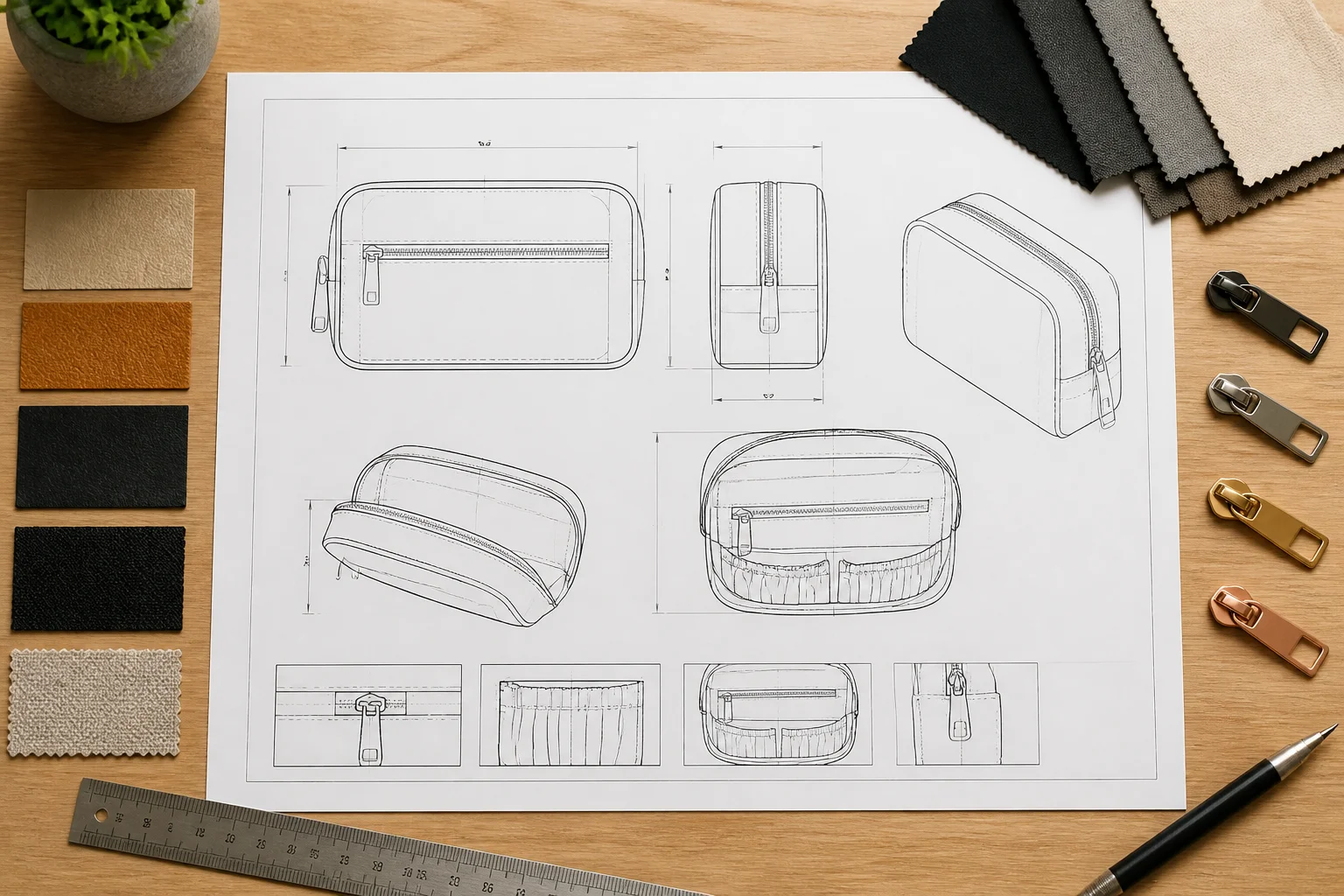
Learn about our custom design and prototyping process on the BEARKY Customization page.
How should brands engineer interior linings for cosmetic protection?
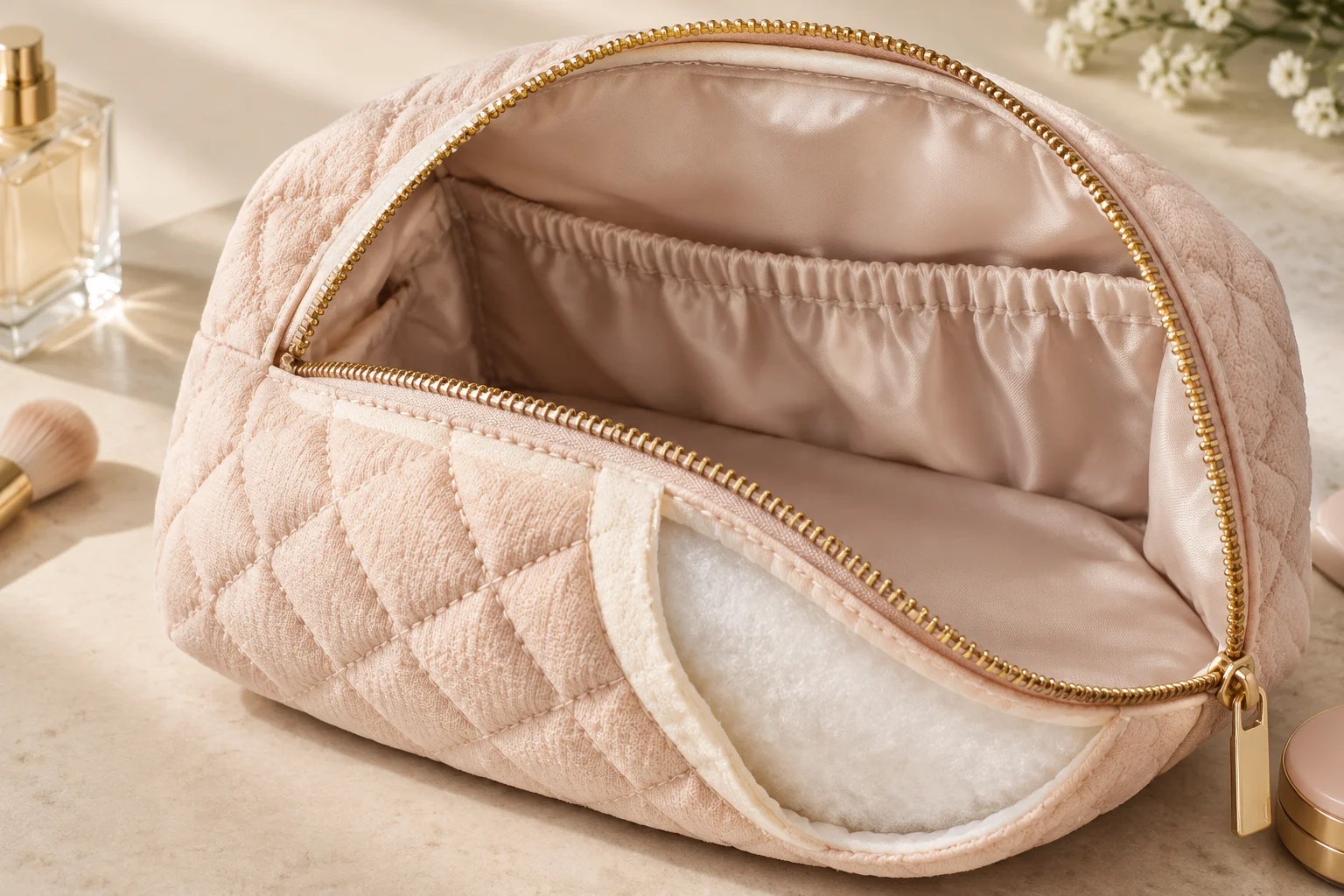
While the exterior of a quilted bag focuses on beauty and texture, the interior lining must deliver practical utility. Cosmetics, lotions, serums, and foundations carry an inherent risk of leakage. A well-engineered lining prevents oily or liquid spills from soaking through the batting to the exterior shell.
| Lining Material | Water Resistance Level | Cleaning Method | Recommended Use Case |
|---|---|---|---|
| 210D / 190T Polyester Taffeta | Moderate (Water-Repellent Coating) | Spot wipe with damp cloth | Standard dry cosmetics (brushes, palettes, lipsticks), cost-sensitive promotions. |
| Wipe-Clean TPU / Clear PVC Film | 100% Waterproof & Leak-Proof | Direct wet wipe with makeup remover | Liquid foundations, skincare serums, travel toiletry organizers, wet/dry compartments. |
| Cotton Poplin / Yarn-Dyed Gingham | Non-waterproof (Breathable) | Machine or hand wash | Cottagecore beauty aesthetics, organic cotton collections, dry brush bags. |
| Recycled RPET Pongee | High (with eco-friendly PU backing) | Easy wipe-clean | Sustainable luxury lines, certified eco-conscious retail gift sets. |
How can beauty brands optimize quilted bags for holiday retail and GWP campaigns?
To maximize commercial ROI on custom quilted cosmetic bags, B2B buyers and brand managers should incorporate these merchandising strategies:
- Design for Dual-Use Functionality: Include detachable wristlet straps, interior elastic brush slots, or wide-mouth wireframe openings so consumers can use the bag both at home on vanity tables and on the go.
- Incorporate Subtle Custom Branding: Quilted textures look most elegant when paired with refined branding techniques—such as embossed leather patches, woven side seam labels, custom metal zipper pullers, or tone-on-tone embroidery rather than heavy screen printing.
- Bundle into High-Margin Gift Sets: Quilted pouches protect delicate glass cosmetic bottles in transit while providing ready-to-gift retail packaging that eliminates the need for single-use paper gift boxes.
- Plan Ahead for Holiday Seasonal Lead Times: Quilted composite fabric requires an extra step of roll-to-roll quilting before cutting and sewing. Brands targeting Q4 holiday launches should finalize sampling by May–June and initiate mass production by July–August.
Discover why global retailers partner with us on the Why Choose BEARKY page.
Frequently asked questions about custom quilted cosmetic bags
What is the typical MOQ for custom quilted cosmetic bags?
For custom quilted cosmetic bags with stock fabric colors and standard diamond/grid patterns, the minimum order quantity (MOQ) typically starts at 500 pieces per style. Custom-dyed Pantone fabrics or bespoke CNC quilted logo motifs generally require 1,000 to 2,000 pieces to achieve optimal fabric yield.
Are quilted cotton cosmetic bags machine washable?
Yes, provided the outer cotton fabric is pre-shrunk and the internal batting uses needle-punched fibers with reinforced seam binding. We recommend gentle cycle cold washing and air drying to maintain the loft and shape of the padding.
Can we quilt custom patterns, such as hearts, stars, or brand logos?
Yes. Utilizing computerized single-needle and multi-needle CNC quilting equipment, BEARKY can program custom vector stitch patterns, including heart motifs, geometric chevrons, floral outlines, or brand initials.
How do you prevent batting fibers from leaking through the stitch holes?
High-quality production utilizes anti-migration scrim backings or fine spunbond non-woven interlinings between the batting and outer fabric, combined with ball-point sewing needles that part fabric yarns without cutting them.
What zipper types work best on quilted cosmetic pouches?
Smooth nylon coil zippers (size #3 or #5) with wide fabric tape are recommended because they glide effortlessly across curved corners without catching on the puffy padded fabric. Metal zippers with custom-engraved alloy pullers add a luxury jewelry accent.
How long does the sampling and mass production process take?
Physical sample development typically takes 5 to 10 working days after tech pack and artwork confirmation. Mass production generally requires 25 to 40 working days depending on order quantity, pattern complexity, and seasonal factory scheduling.
Editor review: Material specifications, batting weights, Pantone color references, and production timelines should be verified with BEARKY's technical team against project-specific tech packs prior to mass purchase order placement.
Contact BEARKY today to receive free design consultations, physical fabric swatch cards, and project cost estimates. Connect with our OEM specialists via the BEARKY Contact Portal.
Reference Sources & Textile Standards
- OEKO-TEX Standard 100: Harmonized Safety and Chemical Testing Criteria for Textiles
- ASTM D3776 / D3776M: Standard Test Methods for Mass Per Unit Area (Weight) of Fabric
- ISO 12947-2: Determination of Abrasion Resistance of Fabrics by the Martindale Method
- U.S. Federal Trade Commission (FTC): Textile Fiber Products Identification Act
- European Chemicals Agency (ECHA): Substances Restricted Under REACH Annex XVII


.jpg)