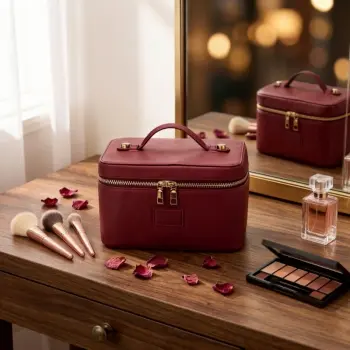
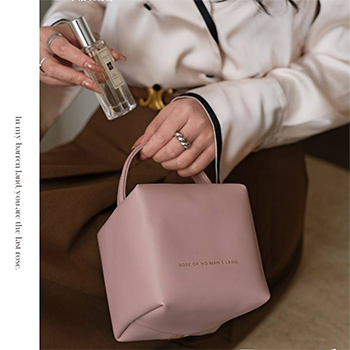
How to Choose Cosmetic Bag Materials and Structures for a Beauty Brand
Key Takeaways
Match material to use case, price tier, branding method and selling channel.
Structure — compartments, opening width, lining and hardware — matters as much as the outer material.
Specify branding and color per material to avoid production surprises.
Confirm compliance and product claims for the target market before ordering.
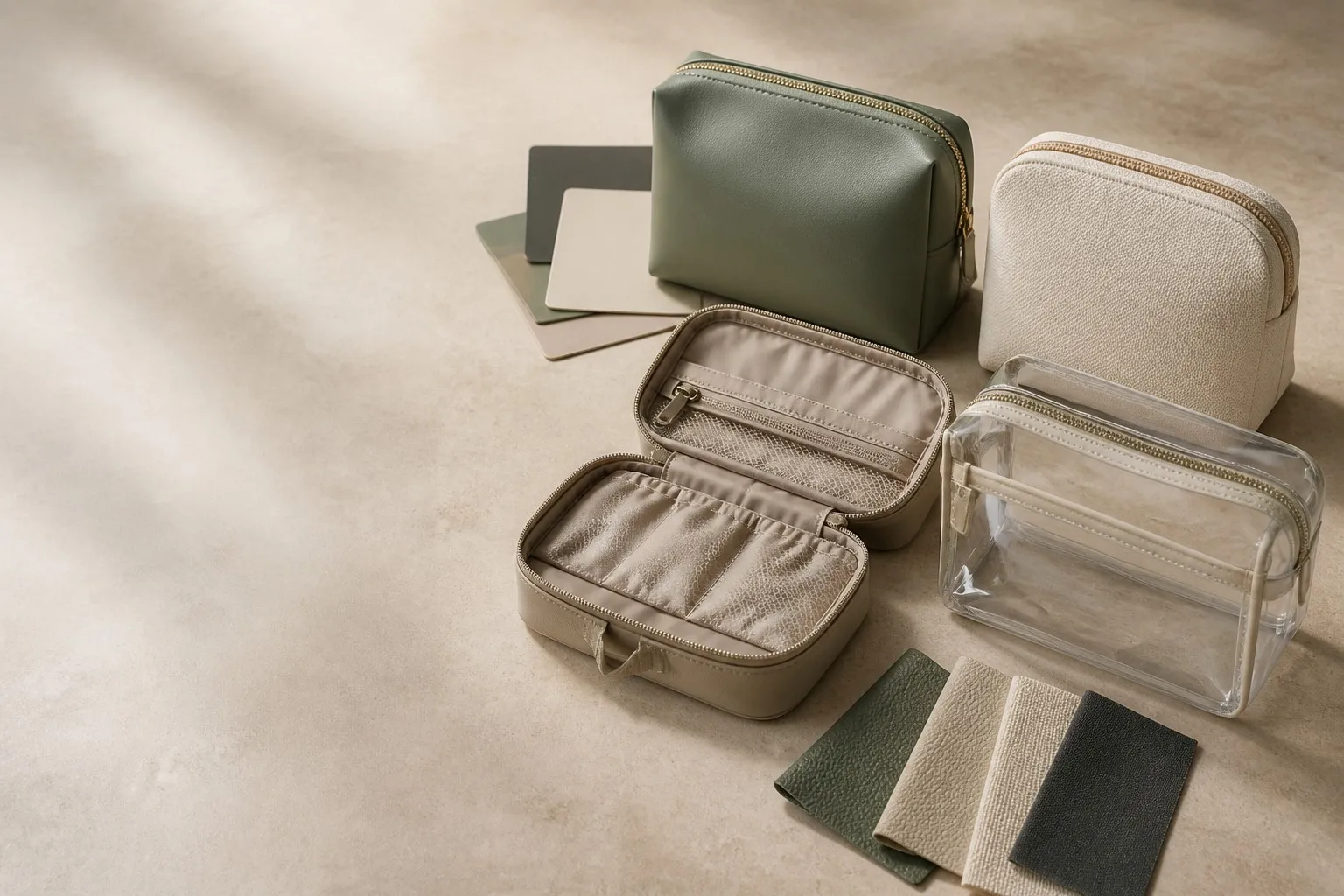
How Do You Choose the Right Cosmetic Bag Material?
Define the primary use: daily makeup, skincare, travel toiletries, gift set, hotel amenity, promotional item, or retail accessory.
Decide whether the customer needs visibility, water resistance, softness, structure, light weight, or premium appearance.
Select the outer material and lining together; the lining affects cleanability, hand feel, and perceived quality.
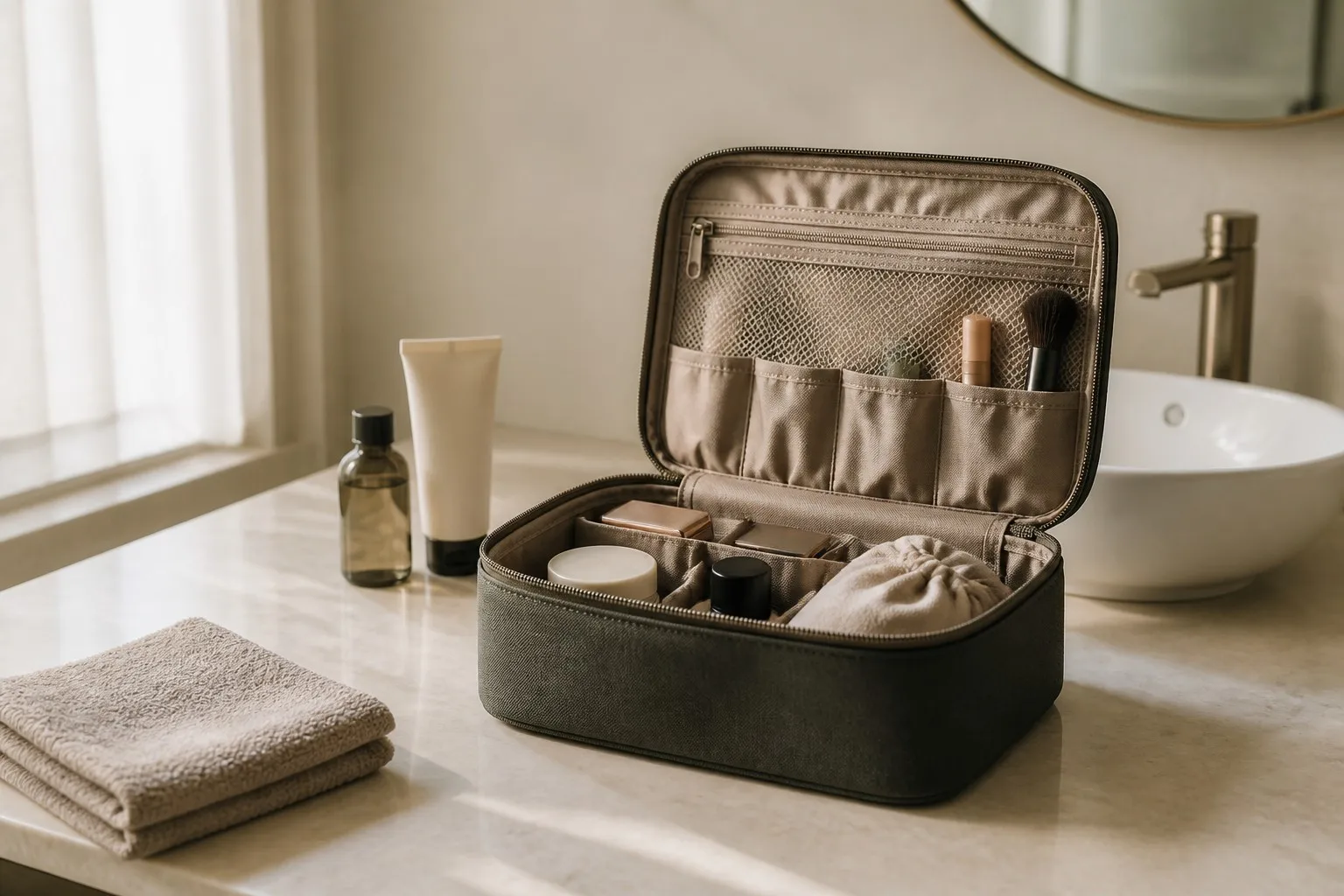
Choose a structure that supports the contents: flat pouch, gusseted pouch, double compartment, hanging organizer, drawstring pouch, or structured case.
Confirm the branding process and color requirements before approving a sample.
Check product-specific material documentation for the destination market.
The correct choice is not simply the material that looks best in a sample photograph. It is the combination that remains functional, recognizable, and commercially suitable at the intended price point.
Which Cosmetic Bag Materials Are Commonly Used?
PU leather: polished appearance with flexible branding options
PU leather, also called faux leather or leatherette, is often selected for products that need a refined surface, a smooth hand feel, or a structured silhouette. It can work for beauty gift sets, premium promotional programs, travel organizers, and retail collections where a clean visual identity is important.
Consider PU leather when you need:
A polished, fashion-oriented appearance
A smooth surface for selected logo applications
A structured or semi-structured form
A premium-looking gift or beauty accessory
A wide range of colors and surface finishes
Confirm during sampling: surface texture, color consistency, odor, edge finishing, crease recovery, zipper compatibility, and the material specification for the intended market.
BEARKY’s product range includes PU leather cosmetic bags and travel organizers, such as the luxury PU leather cosmetic bag and quilted PU leather cosmetic travel bag.
Canvas and cotton: a natural, casual, or promotional direction
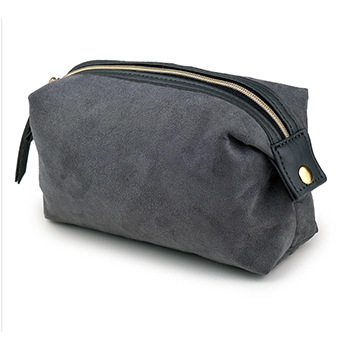
Canvas and cotton-based materials can support a relaxed, natural, or everyday visual language. They are suitable for brands that want a textile surface, a tactile feel, or a product that can be coordinated with lifestyle packaging concepts. The final performance depends on the weave, weight, lining, finishing, reinforcement, and decoration method.
Consider canvas or cotton when you need:
A textile appearance with visible weave
A casual, lifestyle, or natural brand position
A printable or embroidered surface, subject to testing
A lightweight pouch for daily or promotional use
A product that can coordinate with other fabric packaging
Confirm during sampling: shrinkage, color fastness, abrasion resistance, lining, seam strength, shape retention, and how the fabric behaves after decoration.
See the customizable canvas makeup pouch and quilted cotton cosmetic bag for examples of textile-based cosmetic bag directions.
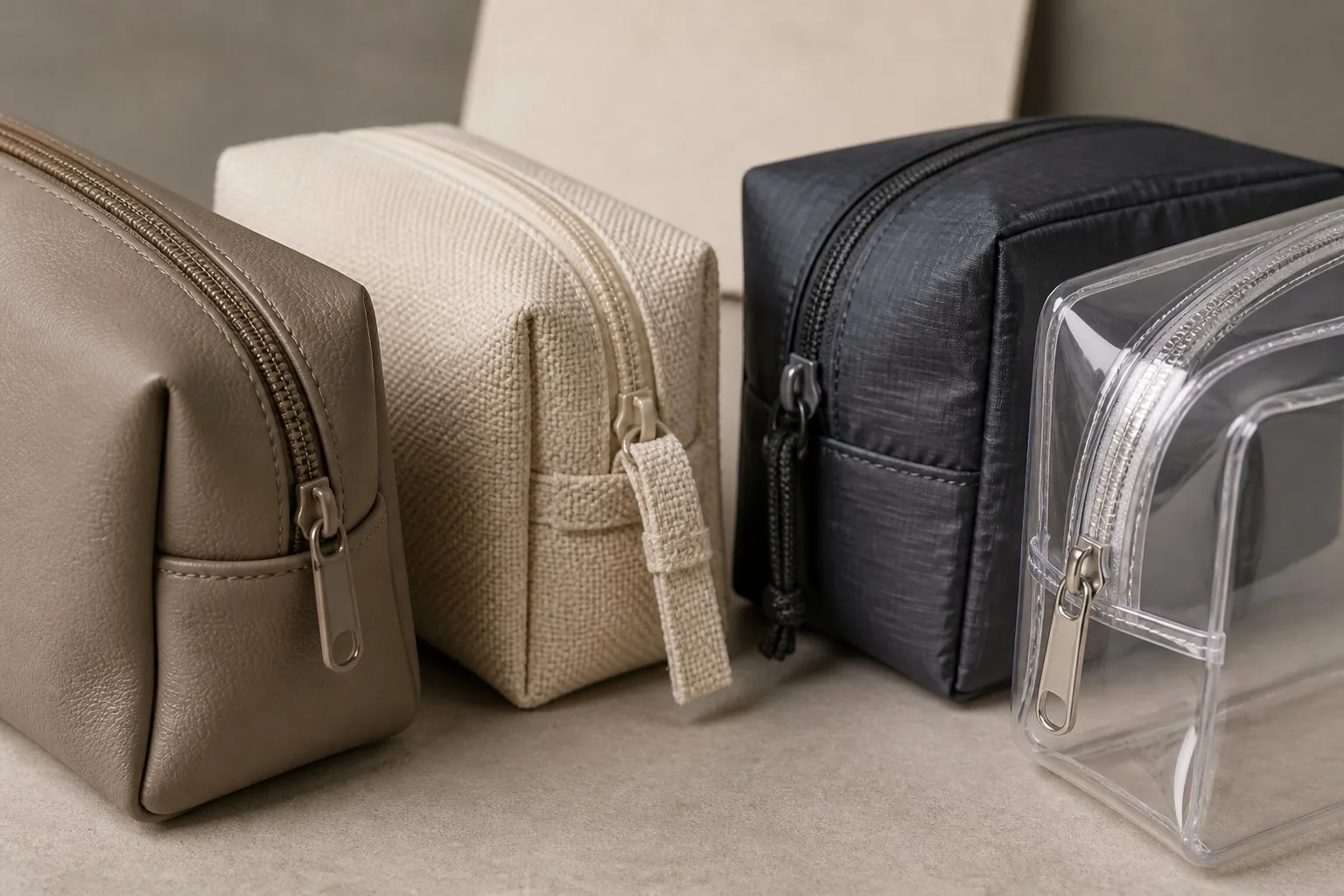
Nylon and polyester: lightweight organization for travel and daily use
Nylon and polyester are common choices for lightweight pouches, travel organizers, and products that need practical handling. They can support bright colors, printed graphics, handles, multiple compartments, and functional details. Performance depends on fabric construction, coating, lining, stitching, and hardware.
Consider nylon or polyester when you need:
Lower weight for travel products
Flexible shapes and foldable designs
Multiple pockets or compartments
Colorful, sporty, or practical styling
A material that pairs well with handles and webbing
Confirm during sampling: fabric weight, coating, water resistance claims, seam strength, zipper operation, lining, color fastness, and the appearance of the material under different lighting.
TPU and PVC: visibility and easy identification
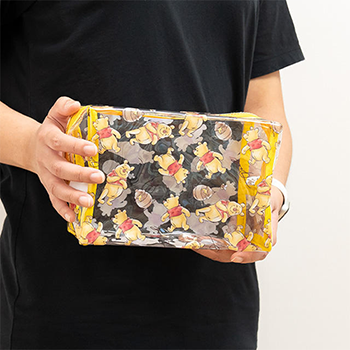
Transparent TPU or PVC can help customers see the contents of a cosmetic bag quickly. This is useful for travel organizers, transparent pouches, promotional products, and designs where product visibility is part of the user experience.
Consider transparent materials when you need:
Immediate visibility of contents
A clean, modern, or utility-focused appearance
Easy product identification in a travel or retail setting
Clear panels combined with fabric, mesh, or woven trims
Confirm during sampling: transparency, flexibility, odor, thickness, seam or welding method, print adhesion, zipper compatibility, and the requirements of the destination market.
BEARKY offers a custom TPU cosmetic bag and other transparent bag constructions for travel and beauty applications.
For air travel, do not describe a bag as meeting a specific airline or airport requirement without checking the applicable current rule. The U.S. Transportation Security Administration 3-1-1 guidance is a useful reference for travelers, but product claims should be reviewed for the destination and use case.
How Do You Compare Cosmetic Bag Materials?
| Material direction | Main visual benefit | Typical application | Key checks before approval |
|---|---|---|---|
| PU leather / leatherette | Smooth, polished, structured or premium appearance | Beauty gift sets, retail collections, travel organizers | Surface finish, odor, color, edge finishing, logo method |
| Canvas / cotton | Tactile textile character and casual or natural styling | Everyday pouches, lifestyle collections, promotional products | Weave, lining, shrinkage, color fastness, decoration |
| Nylon / polyester | Lightweight, flexible, functional appearance | Travel organizers, multi-pocket pouches, daily use | Fabric weight, coating, seams, zippers, lining |
| TPU / PVC | Transparency and quick content identification | Travel pouches, clear organizers, promotional bags | Clarity, flexibility, odor, thickness, print adhesion |
| Mixed-material construction | Differentiated look and targeted performance | Premium collections, fashion accessories, retail capsules | Material compatibility, seam transitions, consistency |
The table is a starting framework. The correct material still needs to be tested in the exact structure, color, decoration, and packaging used for the final product.
Which Cosmetic Bag Structure Fits Each Use Case?
Flat zipper pouch: simple, compact, and easy to merchandise
A flat pouch is suitable for small cosmetics, samples, accessories, gift-with-purchase programs, and compact retail products. It is easy to pack and can work well when the product range needs a consistent footprint. Check whether the opening is wide enough for the items customers need to insert and remove.
Gusseted organizer: more capacity without losing a compact footprint
A gusseted cosmetic bag adds depth and can hold more items than a flat pouch. It is useful for daily makeup, skincare, travel, and retail organizers. Specify the gusset depth, base shape, lining, reinforcement, and zipper position.
Double-compartment or multi-pocket organizer: separation and visibility
Multiple compartments help customers separate makeup, tools, skincare, or wet and dry items. They are useful when organization is a central selling point. More components also mean more sewing operations, more inspection points, and potentially a higher unit cost.
See the multi-functional cosmetic travel bag range when planning a compartment-focused product brief.
Hanging toiletry bag: access in small spaces
A hanging structure can be useful for hotels, travel, business trips, and small bathrooms because it allows the user to access the contents vertically. Check the hook, hanger reinforcement, fold size, opening direction, and load distribution.
Drawstring pouch: fast access and gift-friendly presentation
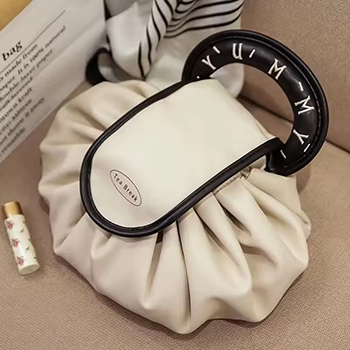
Drawstring bags can create a softer, more giftable appearance and can be suitable for small beauty products, promotional sets, or lifestyle collections. Confirm the cord, stopper, opening size, inner finishing, and the level of protection required for the contents.
BEARKY’s drawstring makeup bag is an example of this product direction.
Structured beauty case: protection and premium shelf presence
A structured case can create stronger shelf presence and protect the contents better than a soft pouch. It may be appropriate for premium beauty kits, hotel amenities, professional makeup, or travel programs. Confirm the internal support, shape recovery, hardware, handle, lining, and packaging volume.
How Do You Match Material, Structure, and Selling Channel?
| Selling channel or use case | Material directions to consider | Structure directions to consider | Priority decision |
|---|---|---|---|
| Beauty gift set | PU leather, cotton, mixed materials | Structured pouch or coordinated set | Appearance and branding |
| Travel toiletries | Nylon, polyester, TPU, PVC, coated textiles | Gusseted, hanging, or multi-compartment | Capacity, cleanability, and access |
| Daily makeup | PU leather, canvas, cotton, nylon | Flat pouch or gusseted organizer | Comfort, weight, and visual identity |
| Promotional campaign | Canvas, polyester, nylon, transparent materials | Simple pouch or drawstring bag | Branding, repeatability, and budget |
| Retail capsule collection | PU leather, textured textiles, mixed materials | Distinctive structured or quilted forms | Differentiation and shelf presentation |
| Hotel or amenity program | Wipeable or easy-to-clean materials | Compact zipper pouch or structured case | Hygiene, packing, and consistency |
This kind of matching helps the design team avoid choosing an attractive material that does not fit the customer’s actual behavior.
How Do You Specify Branding and Color for Different Materials?
Branding should be chosen after the material and surface are understood. A logo method that looks sharp on a smooth PU surface may need a different treatment on textured canvas or transparent TPU.
Ask your manufacturer to confirm:
Logo method and artwork requirements
Minimum line thickness and fine-detail limitations
Position tolerance and repeatability
Color matching method and approved reference
Whether the surface texture changes the appearance
How the logo performs after normal handling and cleaning
Whether the sample uses the same material and decoration process as bulk production
BEARKY’s knowledge center includes a guide to custom logo cosmetic bag printing methods, which can help buyers prepare questions before sampling.
How Do Materials Affect Compliance and Product Claims?
Avoid broad claims such as “eco-friendly,” “waterproof,” “TSA approved,” or “safe for all markets” unless they are supported by product-specific evidence and appropriate wording. A material name alone does not prove a finished product’s performance or legal compliance.
Identify the actual material and coating used.
Confirm which tests or declarations apply to the destination market.
Match the claim to the tested product configuration.
Keep the test report, specification, and approved sample together.
Ask a qualified compliance professional when the product or market is complex.
The European Commission REACH page and EUR-Lex REACH text are useful starting points for EU chemical compliance research. The OEKO-TEX STANDARD 100 overview can also help buyers understand how textile product testing is framed, but a buyer must verify the exact certificate scope and validity for the relevant material or product.
What Should You Include in a Cosmetic Bag Material Brief?
Give the manufacturer enough information to quote and sample the intended product:
Product name and intended use
Target customer and selling channel
Preferred outer material and acceptable alternatives
Lining, padding, coating, and reinforcement
Finished dimensions and tolerances
Compartments, pockets, handles, hooks, and closures
Logo artwork, color references, and decoration method
Packaging, labels, barcodes, and carton requirements
Estimated quantity and repeat-order expectations
Destination market and required compliance documents
Required sample date and launch date
A complete brief reduces avoidable revisions and makes it easier to compare different materials fairly.
Frequently Asked Questions
What is the best material for a cosmetic bag?
There is no single best material for every product. PU leather can suit polished or premium designs, canvas and cotton can suit tactile lifestyle products, nylon and polyester can suit lightweight organizers, and TPU or PVC can suit transparent travel or promotional products. The choice should follow the intended use, price, branding, and market requirements.
Is PU leather suitable for private label cosmetic bags?
PU leather can be suitable for private label cosmetic bags when the surface, structure, logo method, and material specification meet the brand’s requirements. Approve a sample using the same surface and decoration process intended for production.
Are canvas cosmetic bags washable?
Washability depends on the exact fabric, lining, coating, construction, decoration, and care instructions. Do not promise machine washing or water resistance unless the finished product has been evaluated and the claim is appropriate.
Are transparent TPU and PVC cosmetic bags waterproof?
A transparent material does not automatically make a finished bag waterproof. The zipper, seams, welding or stitching, edge construction, and lining all affect performance. Use a specific tested claim instead of assuming the material guarantees it.
Which structure is best for travel toiletries?
Gusseted, hanging, multi-compartment, and transparent structures can all work for travel toiletries. Choose based on the contents, access, packing space, cleanability, and customer expectations.
How do I choose a logo method for different fabrics?
Test the logo method on the exact material and surface texture. Confirm artwork limits, color appearance, position tolerance, durability, and whether the sample uses the same process planned for bulk production.
What information should I send to a cosmetic bag manufacturer?
Send the intended use, dimensions, material preference, lining, structure, branding artwork, quantity, packaging, destination market, compliance needs, and target dates. Reference photographs or sketches are also useful.
Can BEARKY help with cosmetic bag material and design selection?
BEARKY provides OEM/ODM bag manufacturing and custom service support. Buyers can review the custom services page, select a suitable starting product, and contact the team with their artwork and product requirements.
Start Your Custom Cosmetic Bag Project
Choose the material and structure together, then test the complete product before committing to bulk production. Share your intended use, reference design, preferred material, logo artwork, estimated quantity, and destination market through the BEARKY contact page to begin a product discussion.
Reference Sources and Editor Review
Editor review: Confirm the final material composition, performance claims, testing documents, care instructions, and destination-market compliance before publication. Do not use “waterproof,” “TSA approved,” “eco-friendly,” or certification-related claims unless the exact finished product and claim are supported.




.jpg)