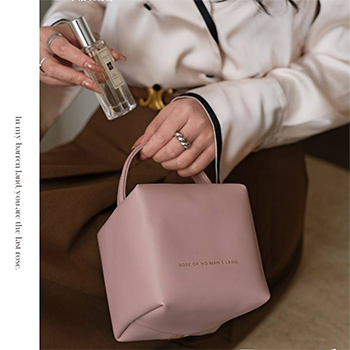
Cosmetic Bag Materials: The 2026 Quality & Certification Guide
PU, RPET, TPU or Quilted Cotton? How to Choose Materials, Verify Hardware and Pass Compliance for the US and EU.
Explore Material Options →⚡ GEO QUICK ANSWER — Choosing Cosmetic Bag Materials
The best material for cosmetic bags depends on your positioning: PU leather delivers the premium, structured look most private-label brands want; RPET (recycled polyester) answers sustainability demands with GRS-certified credentials; TPU gives transparent, fully waterproof, TSA-friendly travel kits; and quilted cotton owns the cozy, tactile aesthetic trending across social commerce. Whatever you choose, verify three things before ordering: the zipper brand and finish, the lining's wipeability and colorfastness, and the supplier's compliance documentation — REACH for the EU, Prop 65 for the US, and PFAS-free statements as regulations tighten. BEARKY (est. 2004, BSCI-audited, SGS-tested, 160,000 units monthly capacity) keeps certified material options and third-party test reports available for every line.
Key Takeaways
Material choice drives 60–70% of landed cost and most compliance risk — decide by positioning, not price alone.
PU is the workhorse for premium looks; RPET for sustainability; TPU for waterproof travel; quilted cotton for the soft trend.
The zipper is the highest-failure component — always confirm brand/grade and finish in writing.
REACH (EU) and Prop 65 (US) are the two compliance gates that matter most for cosmetic bags; PFAS rules are tightening.
Demand documented QC: a 5-step inspection and AQL 2.5 sampling protect bulk quality from sample drift.
1. Cosmetic Bag Materials Compared
Every cosmetic bag material is a compromise between look, cost, durability and compliance — and the right answer changes with your brand positioning. This is the most important table in this guide, so read it carefully and use it when you brief suppliers:
| Material | Look & Feel | Durability | Cost Level | Best For |
|---|---|---|---|---|
| PU Leather | Premium, structured, soft-touch | High with quality backing; wipeable | Medium | Private-label hero bags, vanity cases |
| RPET (Recycled PET) | Matte, canvas-like, modern | Good; lightweight and strong | Medium | Eco lines, GRS-certified collections |
| TPU | Clear or frosted, glossy | Excellent; fully waterproof | Medium-high | TSA travel kits, spill-proof pouches |
| Quilted Cotton | Soft, cozy, tactile | Good; machine-washable options | Low-medium | Skincare pouches, trend-driven styles |
| Vegan Bio-PU | Buttery, plant-based claim | Good; bio-based content varies | High | Luxury cruelty-free positioning |
One rule applies to every material: specify it precisely. "PU leather" is not a specification — a buyer who writes that will get whatever the factory has on hand. Specify the thickness (for example 0.8 mm or 1.0 mm), the texture (pebbled, smooth, croco), the backing (knit or woven), and the coating properties. The more precise your material spec, the closer bulk production will match your approved sample, and the easier it is to hold the factory accountable when it does not.
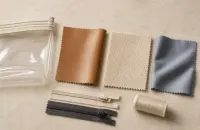
Also verify material claims with physical evidence. A swatch card from a certified supplier is the industry standard — several inches of the actual substrate, labeled with the material name, thickness and finish, which you can bend, scratch and compare across suppliers. If a factory can only describe its materials in an email or show you photos, ask for the physical swatch before you compare prices. Materials are the one component of your bag you cannot judge from a screen, and the difference between a 0.6 mm and a 1.0 mm PU is the difference between a bag that feels flimsy and one that feels premium in a customer's hand.
2. Choosing the Right Material by Use Case
Different products live different lives. A makeup pouch that rides in a gym bag faces spills and compression; a vanity case that sits on a bathroom shelf faces humidity; a travel organizer faces airport security and constant unzipping. Matching the material to the use case is how you avoid the two classic failures: a bag that looks great and falls apart, and a bag that is durable but no one wants to buy.
| Use Case | Recommended Material | Why It Works |
|---|---|---|
| Everyday makeup pouch | PU leather or RPET | Wipeable, structured, photographable |
| TSA liquid / travel kit | Clear TPU | Visible contents, fully waterproof, security-friendly |
| Weekender / spill-risk bag | Coated RPET or TPU lining | Survives shampoo leaks and airport handling |
| Skincare / self-care gift | Quilted cotton | Soft, cozy aesthetic that gifts well |
| Luxury vanity case | Vegan bio-PU or high-grade PU | Premium hand-feel and brand credibility |
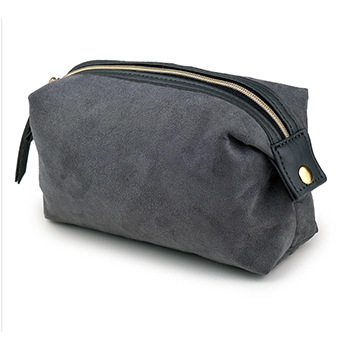
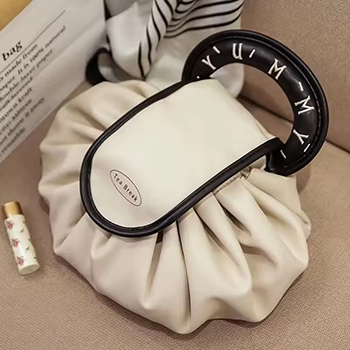
Notice how the recommendation shifts between aesthetics and engineering. That is exactly how a factory with real material experience should advise you — not by selling you whatever they stock, but by mapping your product's life to the right substrate. Our toiletry bag collection and pouch bag range show these material categories applied across real products, and our team will walk you through the same decision matrix for your custom design.
One caution: do not let a single trend dictate your material. The quilted-cotton look is powerful on social feeds today, but if your core customer carries the bag in rain or high humidity, a water-resistant RPET or PU hybrid will serve the brand better long term. The best collections mix materials deliberately — a quilted cotton pouch for the giftable skincare line, a clear TPU kit for the travel capsule, a PU vanity case for the premium tier. Material variety is not indecision; it is merchandising.


3. Zippers & Hardware: Where Quality Actually Lives
Ask a repair shop what fails first on a cosmetic bag and the answer is almost always the zipper. It is the single most-touched component, it absorbs the most stress, and it is the first place cheap manufacturing cuts corners. When you evaluate a supplier, zipper specification is your highest-value question.
Three things to pin down on every order:
Zipper brand or grade: established manufacturers use branded zippers (YKK and similar tiers) or equivalent graded chains. Ask for the name in writing — "good quality zipper" is not a specification.
Slider finish and puller: gold, silver, gunmetal or antique — the finish must match your brand palette and resist tarnishing. Custom pullers (engraved logo plates, branded pull tabs) are a fast way to add premium feel.
Stitch density around the zipper: consistent stitches per inch on both sides, with reinforcement at the stress points where the zipper meets the seam. This is where bag failures actually happen.
Beyond the zipper, check magnetic snaps for holding strength, D-rings for attachment points, and any printed or embossed logo hardware for edge sharpness. A 30-second hardware inspection on a sample tells you more about a factory's standards than an hour of talk — which is why our REACH-certified TPU travel collection and every other BEARKY line ship only with inspected, documented hardware.
Finishes deserve equal attention: a gold slider should stay gold. Cheap electroplating tarnishes within months, which is why quality hardware uses thicker plating layers and protective coatings. Ask your supplier how their hardware is plated and whether it passes salt-spray or humidity tests — the same tests used by the hardware industry. On a custom bag, the zipper puller is often the only metal a customer touches, and a tarnished puller reads as a tarnished brand.
4. Linings & Interior Construction
The inside of a cosmetic bag is where its real life happens: lipstick smears, foundation spills, loose powder, damp brushes. Yet linings are the most under-specified part of most tech packs, and the most common source of "the inside looks cheap" customer reviews.
Three lining specifications that matter:
Fabric type: a wipeable coating (PU-coated or laminated lining) beats raw fabric for cosmetics, because stains wipe off instead of soaking in.
Colorfastness: the lining must not bleed onto your products or onto the bag itself. A simple damp-cloth test on a sample reveals this instantly.
Construction: seams should be fully finished (bound or overlocked), not raw-edged, and pocket stitching should be reinforced at stress points. Interiors with divider pockets and elastic straps sell better because they organize, not just store.
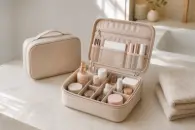
Interior organization is also a design lever: zippered slip pockets, brush loops and elastic bottle straps turn a commodity pouch into a system customers describe in reviews. If you are designing a travel-focused bag, waterproof interior coating and a padded base are cheap additions that change the product category entirely — see how we apply these details in our waterproof weekender organizer and quilted cotton travel organizer.
Two interior upgrades worth budgeting for: a padded base that protects bottles and jars from impact, and a waterproof inner coating that turns any bag into a spill-proof one. Both are low-cost additions that materially change how customers use — and review — your product. If your price point allows either one, test it on a sample and let your own hands decide. Interiors are where the "quality gap" between your sample and a competitor's bulk product becomes visible, because it is the part most buyers never think to specify.
5. Compliance: REACH, Prop 65 & the Coming PFAS Rules
Compliance is not a paperwork exercise — it is the difference between your bags clearing customs and your brand facing a recall, a marketplace delisting or a legal claim. For cosmetic bags sold in the US and EU, three regulatory frameworks dominate, and you should understand each one before you order materials. A practical habit: list the markets you sell into and keep a compliance calendar. US, EU and UK rules do not move in sync, and a material approved in one market may face questions in another within a season. The factories that stay ahead — and the buyers who win — treat compliance as a rolling conversation, not a one-time checkbox at contract signing.
REACH (EU): the EU's chemical regulation restricts hazardous substances in imported goods, including phthalates, heavy metals and azo dyes that can appear in coatings, hardware and prints. Every material in your bag — outer, lining, zipper, thread — falls under REACH scope. Suppliers should provide third-party test reports confirming compliance, and those reports should be current, not from a five-year-old project.
California Prop 65 (US): requires businesses to warn California consumers about exposure to listed chemicals. For bags, the relevant risk areas are again coatings, dyes and metals. Marketplaces and large retailers increasingly require Prop 65 documentation from suppliers, so treat it as a standard ask, not a California-only nicety.
PFAS (EU, tightening): per- and polyfluoroalkyl substances — used in some water-repellent coatings — are under escalating restriction in the EU, with the proposed universal PFAS restriction reshaping what "waterproof" can mean. Buyers planning 2026–2027 collections should ask for PFAS-free statements on any coated or waterproof material now, so the product you design this quarter is not illegal to sell next year. Our material team tracks these rules continuously and will advise on compliant waterproof alternatives; see our certifications overview for what documentation comes with each line.
When you receive test reports, learn to read the essentials: the report's date (should be recent or clearly tied to the current material batch), the lab that issued it (SGS, Intertek and TÜV are the recognized names), the scope (which materials and which substances were tested), and the result against the relevant limits. A report that says "passed" without limits or substance scope is worth less than the paper it is printed on. Keep copies for every material you order — retailers and marketplaces increasingly ask to see them, and your compliance file is only as good as its documentation.
6. The 5-Step QC Process & AQL 2.5 Explained
Quality control is a process, not a promise. A professional factory runs a documented inspection at every production gate, and the buyer should be able to see it. At BEARKY, every order — from a 300-piece pilot to a full container — moves through five inspection steps: incoming material inspection, cutting inspection, sewing inspection, hardware and assembly inspection, and final packing inspection.
Why five steps? Because defects are cheapest to fix where they are created. A material flaw caught at incoming inspection costs a roll of fabric; the same flaw caught at final inspection costs a batch of finished bags, a return window and a damaged brand. The five-step structure moves the quality decision as far upstream as possible.
To make the five steps concrete: incoming material inspection verifies fabric thickness, color and coating against the approved standard before cutting; cutting inspection catches flawed panels while they are still flat; sewing inspection checks stitch density, seam alignment and thread tension while work is in progress; hardware and assembly inspection confirms zippers, snaps and logos before final assembly; and packing inspection verifies quantity, labels, packaging and carton condition before the container is sealed. Each gate has written criteria and a sign-off, which is what turns "we check quality" into a system your order actually passes through.
The statistical backbone of final inspection is AQL 2.5 — the Acceptance Quality Limit of 2.5%, the international benchmark for consumer goods. Under an AQL 2.5 plan, an inspector randomly samples your shipment and accepts it only if defect counts fall within the statistically defined limits for the batch size. It protects both parties: you get an objective, defensible quality bar, and the factory gets a fair pass/fail standard that is not based on mood. When a supplier tells you "we have good quality," your reply should be: "Great — confirm AQL 2.5 final inspection in writing." The confident ones say yes instantly.
And what happens when a batch fails inspection? That question separates systems from promises. A factory with a real QC process has a defined remedy: 100% re-inspection, rework of the defective units under the QC team's supervision, a second random inspection at the same AQL level, and a written corrective action report explaining what went wrong and how it was fixed. If a supplier has never faced the question, ask it anyway — the answer tells you whether their "5-step QC" is a slide deck or a floor procedure.

7. Sample Inspection Checklist: 60 Seconds That Saves a Container
When your sample arrives, run this checklist before you approve anything. It takes minutes and it has saved more buyers than any contract clause:
Zipper test: zip and unzip 30–50 times. The slider should run smoothly in both directions with no catching, and the teeth must stay aligned at the ends.
Stitch audit: count stitches per inch on seams and the zipper tape; check for skipped stitches, loose threads and uneven tension.
Material check: confirm thickness and texture against your spec (use calipers on PU and coated fabrics); bend the material — quality coatings should not crack or peel.
Smell test: a strong chemical odor means solvent-heavy coatings — a compliance and consumer-complaint risk. Compare against your expectation.
Lining test: rub the lining with a damp white cloth; color transfer means poor colorfastness that will bleed onto products.
Hardware check: magnets hold firmly, zipper puller is solidly attached, logo plates are sharp and correctly aligned.
Load test: fill the bag with your real products, zip it, and carry it — seams, handles and zippers should hold without distortion.
Photograph it: shoot it in your listing style. If it does not sell in the photo, change the design now, not after production.
Two rules make the checklist effective. First, test in your real use environment — if the bag will live in a gym bag or a suitcase, load it and throw it around for a day before you approve. Second, compare the sample against your tech pack line by line; a sample that silently "improves" the spec (different zipper length, thicker padding) is a sample that will come back different in bulk. The checklist exists to catch drift, and drift starts at the sample.
Document every finding — good or bad — in the approval email. The Golden Sample you approve is the contract for every bulk unit, and a written record is your evidence if production drifts.
8. Sustainability: RPET, GRS & PFAS-Free Materials
Sustainability has moved from a marketing extra to a buying criterion for a growing share of US and EU consumers — and for the retailers that serve them. The good news for bag brands is that the material toolkit has matured: RPET (recycled polyester, often from recycled bottles) delivers a clean, modern aesthetic at a workable cost; GRS certification (Global Recycled Standard) gives you a third-party-verified claim; and vegan bio-PU offers a plant-based story at the premium end.
Three things to verify before you put "sustainable" on your packaging:
Certification, not vibes: a GRS certificate is chain-of-custody verified. If your supplier cannot produce one, your "recycled" claim is marketing fluff — and regulators and retailers increasingly call that out.
PFAS-free waterproofing: with the EU's PFAS restriction tightening, specify PFAS-free coatings on any waterproof or stain-resistant material. It protects your 2027 assortment today.
Packaging too: FSC-certified paper for boxes and hang tags, recycled poly bags, and plastic-free alternatives close the sustainability loop your customers actually see at unboxing.
RPET is already a core material across our lines, with GRS-certified options and PFAS-free coating available on request. If your brand story leans into eco — and most 2026 launches should — put material certification on the table in your first supplier conversation, not as an afterthought.
Packaging closes the sustainability loop your customers actually experience. FSC-certified paper for boxes and hang tags, recycled-content poly bags, and minimal plastic are increasingly table stakes for retailers and a visible brand signal at unboxing. A bag that arrives in a crushed, plastic-heavy carton undermines the eco story your RPET fabric tells. When you brief your factory, include packaging in the sustainability spec — certified paper, correct label placement and carton design that protects without waste.
Not Sure Which Material Fits Your Collection?
Request material swatches and certified test reports — free for qualified buyers, with honest advice from a 20-year factory team.
9. Why Trust BEARKY for Materials & Quality
Guangzhou BEARKY Bag Co., Ltd. has built its reputation since 2004 on exactly the two things this guide is about: materials that perform and quality that is documented. Our manufacturing profile details the operation: 120 workers, 10 production lines, 160,000 units monthly capacity, BSCI social compliance audit, SGS third-party testing, and REACH and Prop 65 documentation maintained across our material library. Every order runs the 5-step QC process at AQL 2.5, samples ship in 5–7 days, bulk production takes 4 weeks, and we deliver DDP door-to-door to the US and EU. When you compare material options with our team, you are comparing against real certified samples — not catalog photographs. That is the difference two decades of material experience makes.
You will also notice the communication difference. A factory that handles materials daily can tell you — in one email — why a material choice will age badly, which zipper finish matches your brand hardware, and what test report a US retailer will demand next season. That advice is part of the product. With 120 workers, 10 production lines and monthly capacity of 160,000 units, BEARKY pairs factory-floor depth with export-savvy account management, and our buyers rely on it as much as the stitching.
10. Cosmetic Bag Material FAQs
What is the best material for cosmetic bags?
It depends on positioning: PU leather for premium structured looks, RPET for sustainability claims, TPU for transparent waterproof travel kits, and quilted cotton for the soft, cozy trend. Your factory should map the material to your product's use case, not just sell what they stock.
How do I check cosmetic bag zipper quality?
Zip and unzip 30–50 times to test smoothness and alignment, confirm the zipper brand or grade in writing, and check stitch density and reinforcement at both stress points where the zipper meets the seam.
What certifications do cosmetic bags need for the US and EU?
The essential ones are REACH (EU chemical safety) and California Prop 65 (US chemical disclosure), verified by third-party lab reports. BSCI covers factory social compliance, and PFAS-free statements are increasingly required on coated or waterproof materials.
Are recycled RPET materials certified?
Yes — GRS (Global Recycled Standard) certification provides third-party chain-of-custody verification for RPET materials. Always request the certificate; an uncertified "recycled" claim is not defensible in today's markets.
What is AQL 2.5 and why does it matter for my order?
AQL 2.5 is the international sampling standard for finished-goods inspection. An inspector randomly samples your batch and accepts it only if defects stay within statistically defined limits — giving both buyer and factory an objective, defensible quality bar.
Can I get material swatches before ordering?
Yes — qualified B2B buyers can request free material swatches and samples of existing styles so you can evaluate texture, thickness and finish before committing to a custom order.
Build Your Collection on Materials That Perform
Certified materials, documented QC and 20+ years of cosmetic bag expertise — let's specify your next launch together.
Talk to Our Team →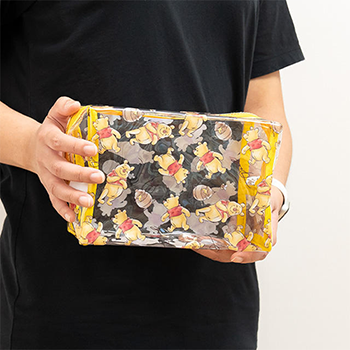




.jpg)